





Many of the project stakeholders feel that GFC drawings and permit drawings are one and the same thing.
Both have plans, both have elevations. Both look official, too.
And that’s exactly where the confusion begins. Common questions that arise on almost every project include:
-
Permit drawings are approved. Can we start construction now?
-
The client says to use these drawings on site.
-
Why do we need GFC drawings when approvals are already in place?
The confusion is real. And, this leads to site delays, rework, legal trouble and cost overruns.
So, for builders, developers and all project stakeholders, understanding the role, purpose and timings related to GFC and permit drawings is critical. Let’s break this down with simple examples from real life.
What are GFC Drawings?
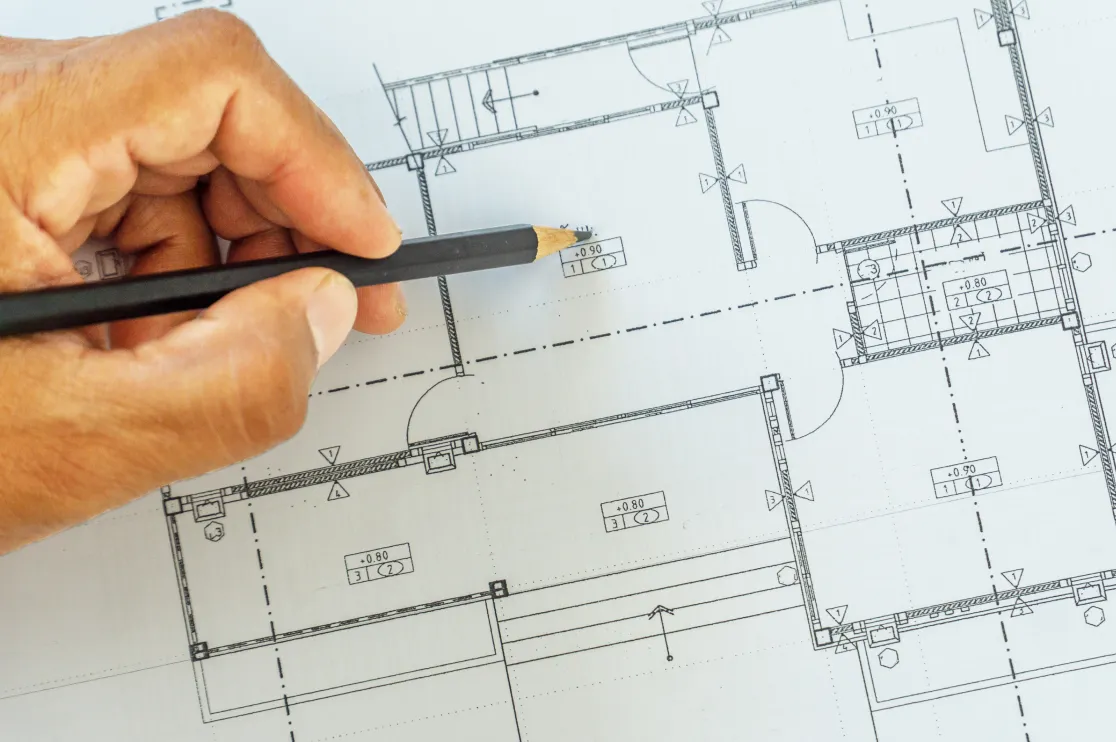
GFC drawings, also known as “Good for Construction” drawings, are used by construction professionals on-site. They contain detailed technical information that explains exactly how the approved design will be built.
These construction drawings provide complete technical guidance to builders, developers, engineers, and other construction professionals on how to build the project. GFC drawings typically include:
-
Exact dimensions
-
Material specifications
-
Detailed sections and details
-
Structural, MEP, and coordination information
In short, GFC drawings tell “how to build the project”.
Learn more about types and other detailed information on GFC drawings in our blog. What are GFC drawings?
What are Permit Drawings?
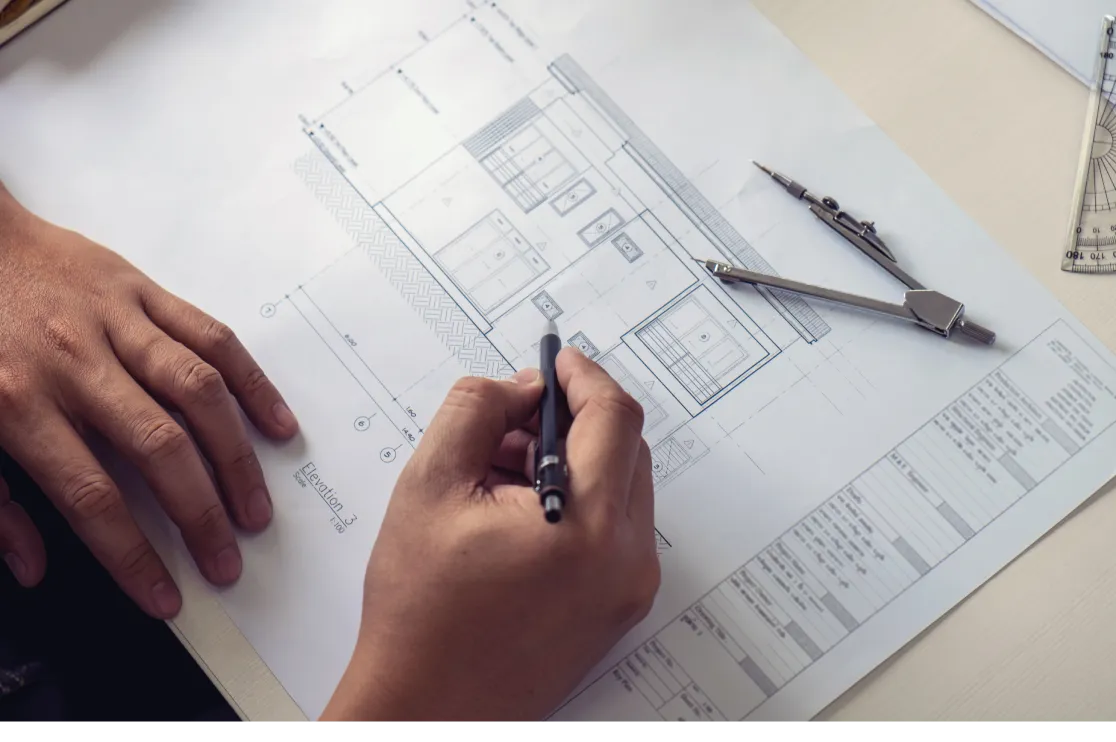
Permit drawings or submission drawings are the drawings that are used to submit to local authorities to seek approval for the planned construction. They contain information that ensures that the project:
-
Follows local building codes
-
Complies with zoning regulations
-
Meets safety standards
The primary focus is more on legal requirements and code compliance. These are required to be submitted to the local bodies before any construction work can begin.
In short, permit drawings tell the design intent, not the execution method.
The permit drawings act as a guide for the construction. GFC drawings or construction drawings are later developed based on approved permit set to guide actual construction.
This ensures that the contractor sticks to the agreed specification and design. Thus, permit drawings are the key to ensuring that the construction project runs smoothly and all legalities are met.
A Simple Real-Life Example
Suppose you are working on a commercial development project, such as a shopping mall in Texas.
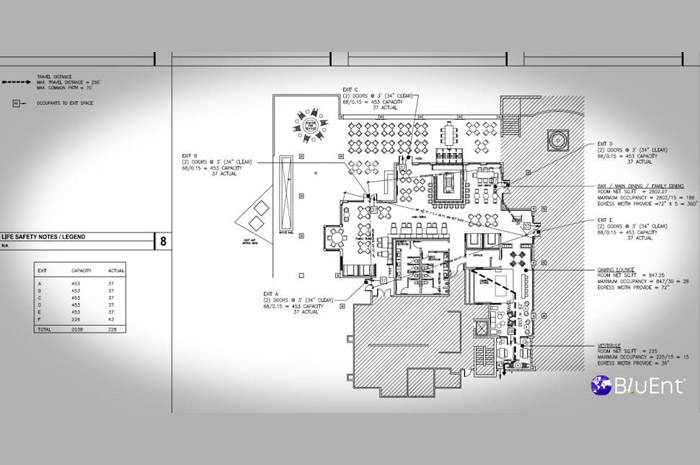
The drawing plans for permits or permit set show where the shopping mall sits on the plot, its height, its floor plan arranged, distances from the neighbour wall, and safety access. That’s enough for the authority to sign off because it shows code compliance.
The GFC set shows every room layout with precise dimensions, where walls change thickness, how MEP systems run, where the HVAC drops go, what materials each wall uses, etc. Without this, the site team would keep guessing and assuming.
In simple words-
Permit drawings tell “This project is allowed” GFC drawings tell “How this project will be built”
Tabular Difference between GFC Drawings and Permit Drawings
| GFC Drawings | Permit Drawings | |
|---|---|---|
| Other Names | Working drawings, Construction drawings, IFC (Issued for Construction), GFC set | Approval drawings, Submission drawings, Authority set, permit set |
| Purpose | Used for actual construction on site. They provide clear instructions on how the building must be built. | Used to obtain approval from local authorities and ensure compliance with zoning, safety, and building regulations. |
| Benefits |
|
|
| Components | Detailed floor plans, sections, elevations, structural drawings, MEP layouts, schedules, construction notes, and material specifications. | Site plan, basic floor plans, elevations, limited sections, and code compliance notes. |
| Level of Detail | Very high level of detail. All dimensions, materials, connections, and installation methods are clearly defined. | Low to moderate detail. Only the information required for approval and compliance is included. |
| Drafting Time | Takes more time due to extensive detailing and coordination between architectural, structural, and MEP disciplines. Approx. 8-12 weeks | Takes less time since drawings are simplified and focused on regulatory requirements. Approx. 4-6 weeks for completion |
| Cost Impact | Higher upfront drafting cost, but significantly reduces construction errors, rework, and delays, helping control overall project costs. | Lower initial drafting cost but using permit drawings for construction can lead to costly rework and delays. |
| Number of Drawings | Large and detailed drawing set. Can range from dozens to hundreds of sheets depending on project size. | Smaller and limited set. Only drawings required for approval are included. |
| Change Management | Changes are tightly controlled. All revisions are documented, and updated drawings are issued to the site team. | Changes often require resubmission and reapproval, which can delay the permitting process. |
| Usage by Professionals | Contractors, site engineers, subcontractors, fabricators, and MEP teams. | planners, and local building authorities. |
| Examples | Detailed blueprints for a commercial complex, Detailed and full set of drawings for a commercial building complex | Commercial building permit drawings, zonal approval drawings for addition/extension, residential home permit drawings |
Why Distinction Matters for GFC Drawings & Permit Drawings?
Both drawing sets play a distinct role at different stages of a project. Submitting GFC drawings to local bodies (USA) or detailed working drawings to the planning authority (UK), can result in rejection.
Reason? The authorities don’t have time to look into the details of the blueprints and find what’s working and what’s not. They’re concerned only about compliance and not how things will be constructed.
On the other hand, issuing permit drawings to contractors can lead to assumption-based construction due to lack of technical details. Resulting in rework, delays and in some cases, even project failure.
The best project outcomes are achieved when permit drawings and GFC drawings work together, each serving its intended purpose.
Recommended Reads:
Professional Construction Documentation Services with BluEnt
Whether you need permit drawings or GFC (construction) drawings in the USA, BluEnt provides reliable construction documentation services that keep your project on track. From early-stage approvals to site-ready working drawings, our teams understand what each project stage demands.
With experience across the USA, UK, and other global markets, our experts bring strong technical knowledge, code awareness, and practical site understanding to every drawing set we deliver. The result is clear documentation and CAD services that supports smooth approvals, accurate construction, and fewer on-site surprises.
If you’re looking for a construction documentation partner who understands both compliance and constructability, BluEnt is here to support your project from planning to execution.
FAQ
Can I Start Construction Without Permit Drawings?Straight answer: No. It’s illegal to start construction without permit drawings. Local authorities can anytime stop the work and can lead to heavy penalties. In severe cases, non-compliance can even lead to demolition orders issued by local authorities. So, it’s important to get the permit set.
How to Avoid Confusion Between Permit and GFC Drawings?Following these steps helps prevent site confusion, approval conflicts, and costly rework.
- Finalise and freeze GFC drawings only after permit approval is received.
- Incorporate all authority comments and permit conditions into the GFC set.
- Issue only GFC drawings for site construction, not the permit set.
- Follow strict version control to ensure the site team is always working from the latest drawings.
- Complete architectural, structural, and MEP coordination together before releasing GFC drawings.






 The Cost of Inaccurate Construction Documentation: How Quality Control and Version Control Protect Project Margins
  BIM vs CAD: When to Use Each for Optimal Project Success
  AI in Construction Design: What’s Actually Changing, What’s Still Hard, and What Your Firm Should Do Next
  Blender for Architectural Rendering: A Complete Guide for Beginners