



When marketing a multi-million-dollar high-rise or a commercial tower, you are selling a vision of the future. Before a single brick is laid, your entire pitch relies on architectural renders.
Everything comes down to your choice of rendering angles. A poorly chosen camera angle, even for highly photorealistic CGI, can stop stakeholders from seeing the project’s real value and design intent.
What follows is:
-
Premium materials look cheap
-
Surrounding context gets lost
-
Logistics and entry points become a mystery
-
Misinterpretation of design and scale
-
USP of building gets hidden
In high-stakes real estate, clarity closes deals. If investors and future tenants can’t instantly see the vision, there are no pre-sales, no signed leases and no secured capital.
As one of the leading 3D architectural rendering studios, we’ve compiled the 5 best exterior 3D skyscraper rendering camera shots/viewpoints that maximize FOMO (fear of missing out) and help successfully sell your high-rise project before it is built.
Table of Contents:
Let’s check some of the best practices of choosing exterior rendering angles for high-rise and skyscrapers in architectural visualization.
1. Aerial Bird’s-Eye View (The “Context” Shot)
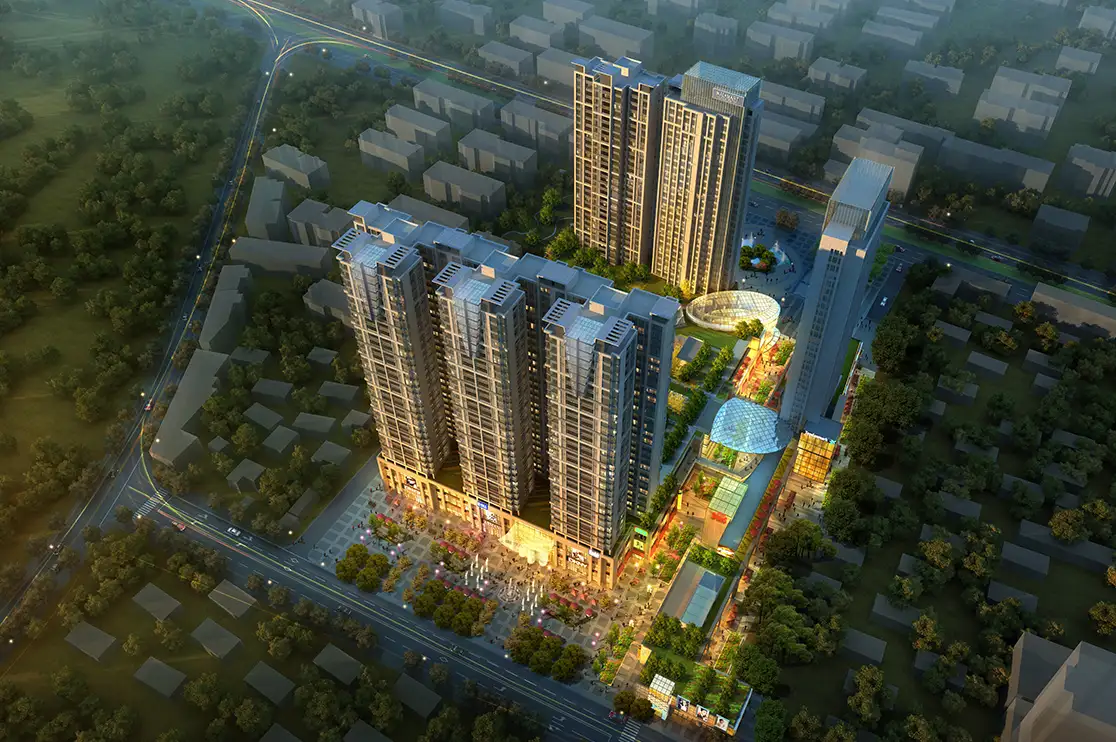
An aerial view shows the project’s geographical context and master plan value. It is a drone-style or satellite-integrated view looking down on the high-rise and its neighborhood. It shows how the development:
-
Integrates into the surrounding urban infrastructure
-
Connects to nearby transit hubs, parks and water bodies
-
Fits the value of neighboring real estate
-
Meets sustainability and zoning requirements, such as green space
At BluEnt, our real estate partners in the USA and Canada often share drone footage or satellite imagery of the real site. We place the 3D exterior render into it using photo montage. If no footage exists, we can also build the entire surrounding area from scratch.
Expert Tip: Get your aerial renders in multiple lighting conditions: day, dusk, night and overcast. It is much easier to produce them together while the project is still in progress. Also, share the project location with the 3D studio so they can match the natural sunlight and artificial lighting realistically. Different lighting shows investors how the tower looks at any time of day, and matching the real site’s sunlight makes the render feel true to the place.
2. Worm’s-Eye View (The “Grandeur” Shot)
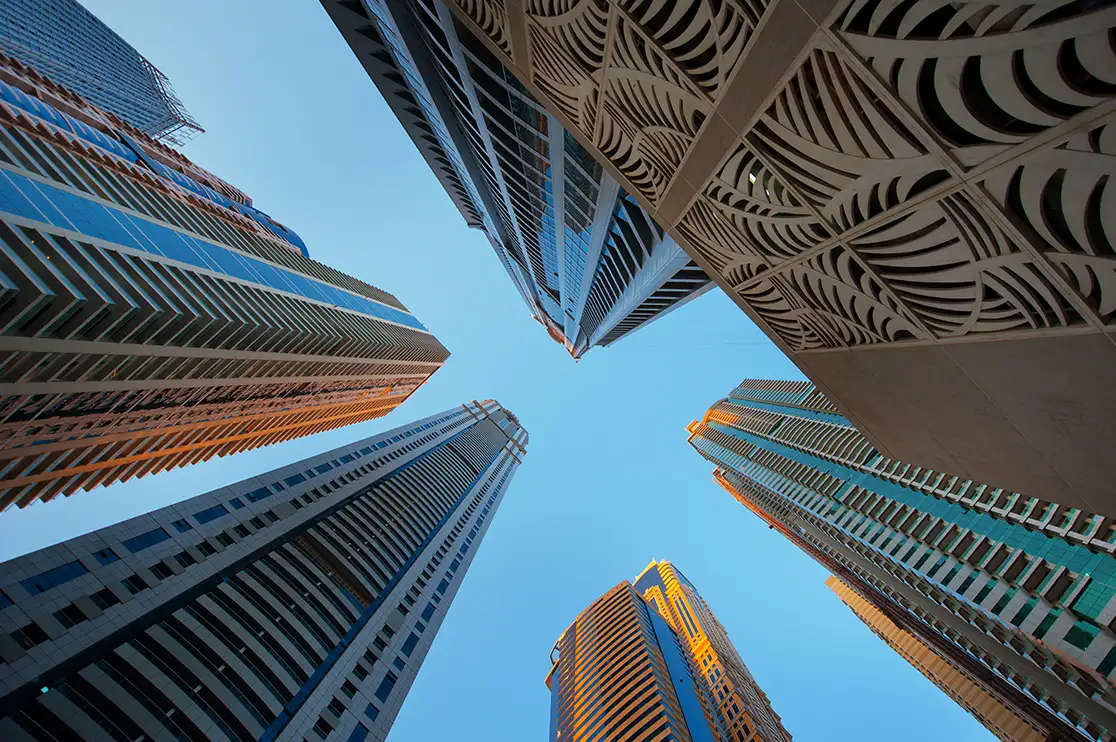
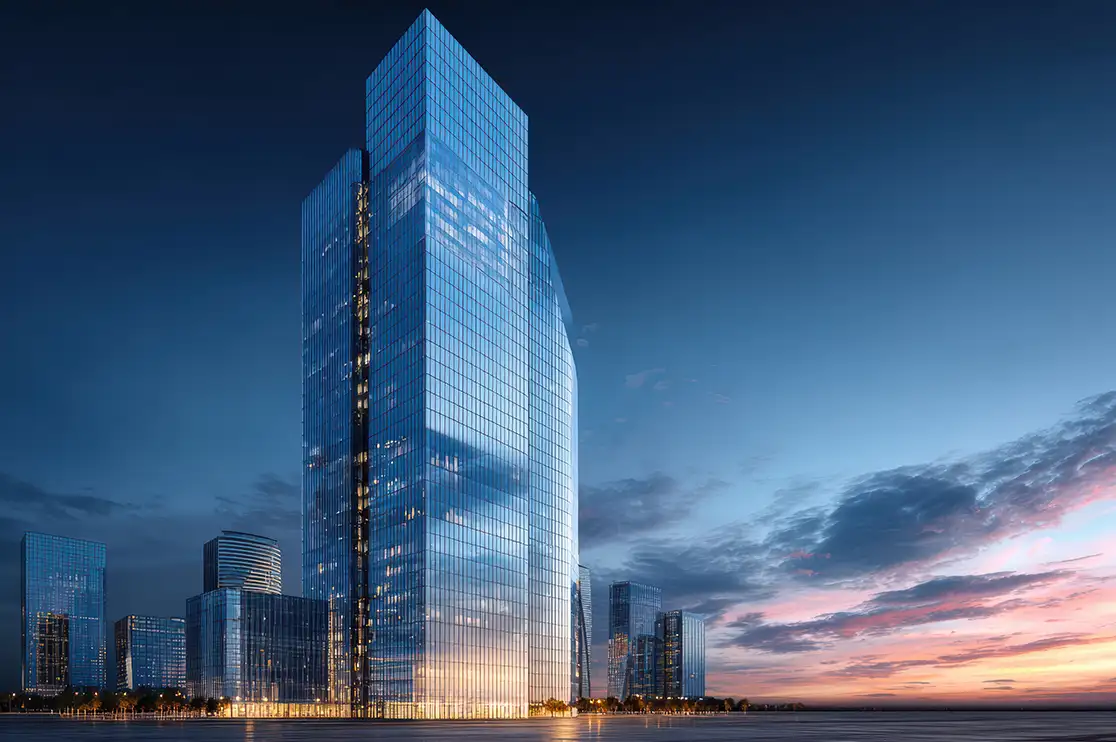
The next best angle for skyscraper rendering is the worm’s-eye view, a bottom-up view of the high-rise. This camera angle uses three-point perspective to stretch the building’s lines toward the clouds.
These exterior renders create a “larger-than-life” effect and build an emotional sense of luxury and success. They showcase:
-
The immense scale of the tower
-
The vertical structural frame
-
The sheer architectural grandeur
This makes the worm’s-eye shot a highly effective visual tool for luxury and corporate real estate marketing.
Expert Tip: Keep the tower’s crown in the frame and avoid tilting the camera too steeply, or the building looks like it is leaning or falling backward. Add trees, people or an entrance canopy in the foreground to give viewers a sense of scale. Pair the shot with a dramatic sky, such as golden hour or dusk, so the glass facade reflects the colors and the tower stands out.
Elevate Commercial Designs with 3D Rendering
BluEntCAD delivers realistic commercial renderings, architectural visualization, and detailed interior and exterior views to communicate design intent and support project presentations.

Download Brochure
Share a few details to access the commercial rendering brochure and learn more about our solutions.
Commercial Bim Brochure
3. Street-Level View (The “Hero” Shot)
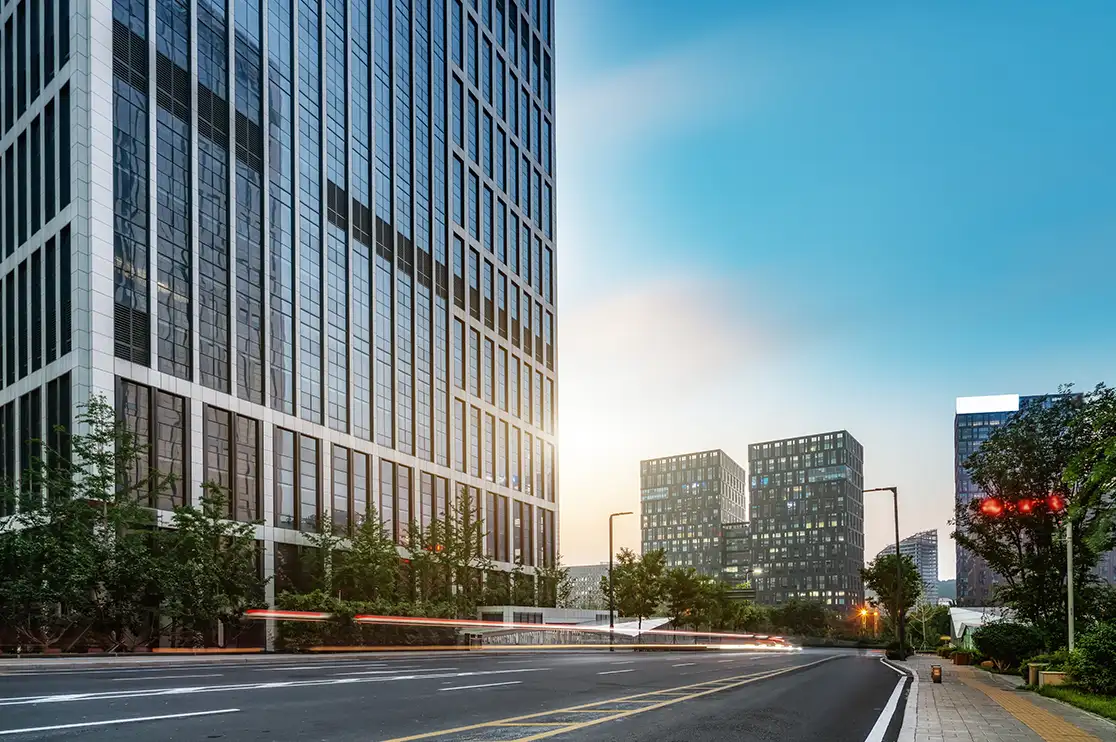
Convey the mood of how it feels like walking down the lane on an early morning or busy evenings with streetscape renderings for high-rise projects. Either render an image or an animation or a walkthrough using lifelike elements like people, walkways, trees, landscaping and passing vehicles.
This eye-level shot of the commercial tower visualization best showcases the active public spaces such as main lobby entrance, retail spaces and surrounding streetscape. It gives:
-
Retail tenants, a clear view of shopfront visibility and foot traffic
-
City approval boards, a clear picture of how the building meets the street
-
Buyers and investors, a feel for how people will use and enjoy the space
Expert Tip: Frame the shot as if viewed from a cafe window across the street, with a slight foreground obstruction like a window frame or glass reflection. These small imperfections make the render feel real and help buyers picture themselves there.
4. Semi-Aerial / Podium Angle (The “Amenity” Shot)
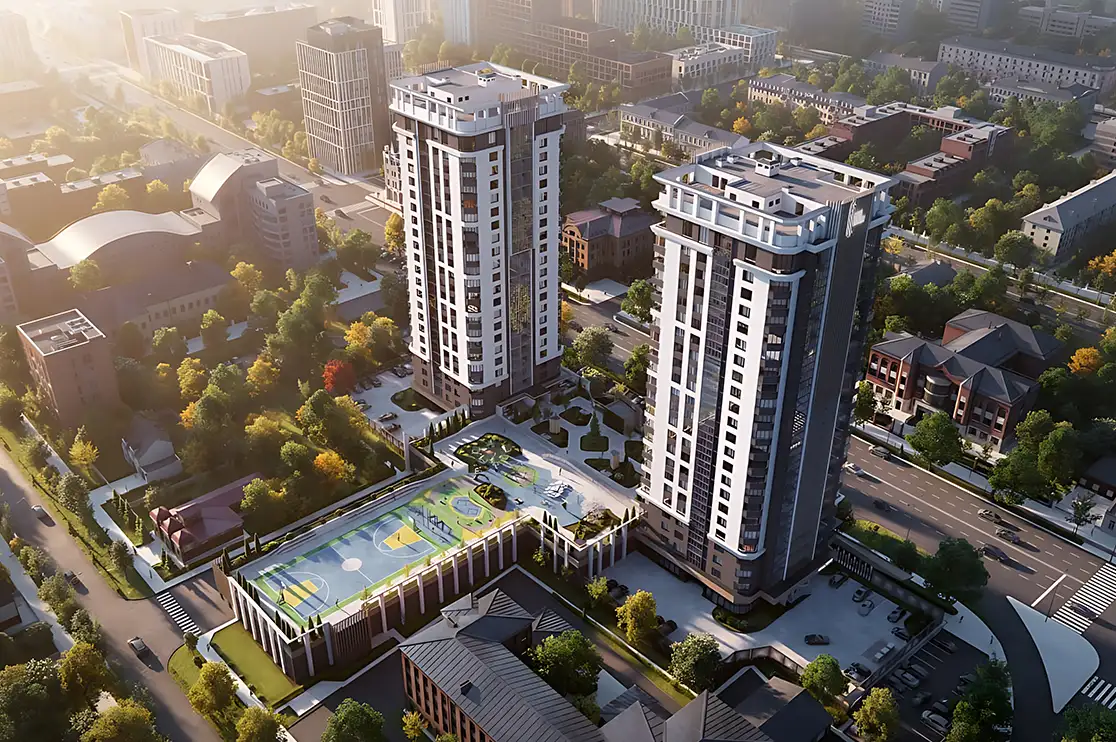
This angle sits between the eye-level and aerial views. The shot is taken from a distance and gives an elevated view, often positioned just above the building’s lower tier or mid-level terraces, from the front or a corner of the building.
It works well for marketing because it gives a clear view of the amenities and local neighborhood that make up a big part of the project’s USP:
-
Landscaped podium courtyards
-
Infinity pools
-
Outdoor dining decks
-
Glass-walled fitness areas
A US developer came to us for 3D renders of their commercial tower. We later turned the same podium and street-level angles into a walkthrough and animation, and the client used them to boost their presale campaign.
Expert Tip: Make this your “money shot” and use it in brochures, social media, website and billboards. Keep the camera elevated so the pool decks and terraces are clearly visible.
5. Close-Up Vignette (The “Materiality” Shot)
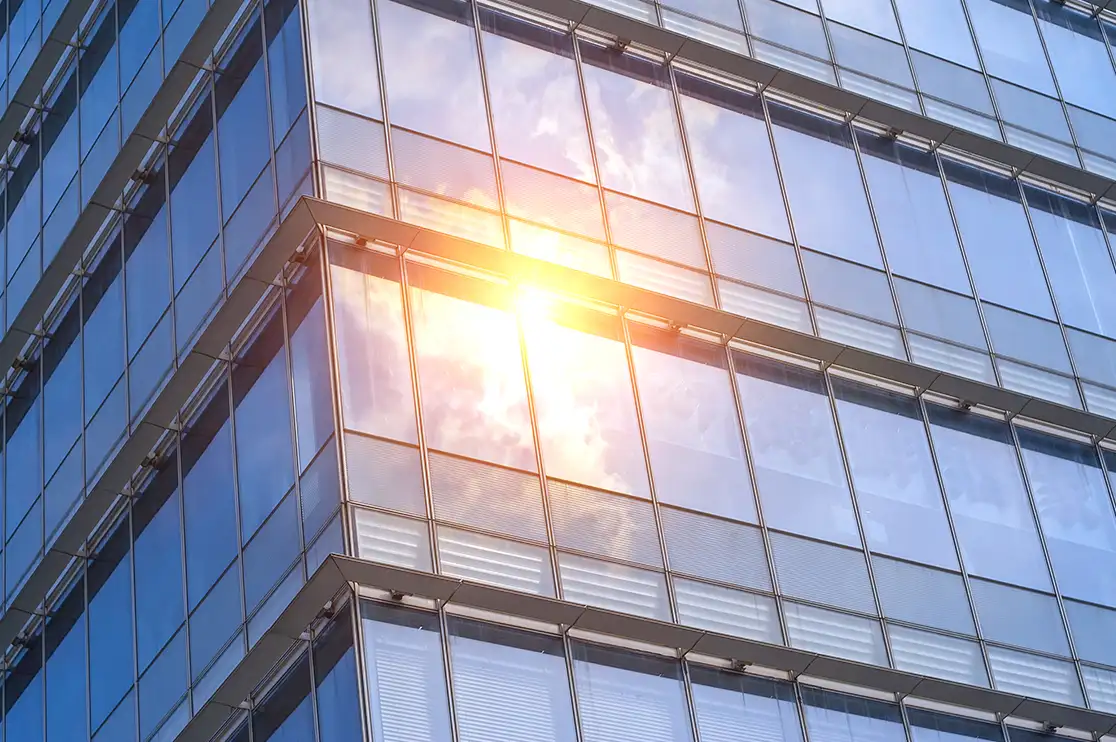
A close-up vignette zooms in on one small part of the commercial tower, like the glass facade, a corner, a balcony or a sky-bridge. Instead of showing the whole tower, it shows you what the tower is made of.
Far-away views tell buyers how big the building is. Close-ups tell them how well it is built. This shot shows:
-
The quality of the glass, metal and stone
-
How light reflects off the facade
-
The fine finishing on balconies and edges
When buyers can see the material up close, the promise of a premium build feels real and easy to trust.
Expert Tip: Choose the detail that sells your project best, such as the glass facade, a corner junction or a balcony edge, and shoot it in soft morning or golden-hour light. Low-angle sunlight brings out the texture and reflections of the materials. Share the actual material samples or finish specs with the 3D studio so the render matches what will be built.
Recommended Reads:
Final Words
There are hundreds of camera angles you can choose for skyscraper rendering, but the best one depends on your needs and goals.
-
An aerial view sells the location
-
A worm’s-eye view sells the scale
-
A street-level view sells the experience
-
A podium shot sells the lifestyle
-
A close-up sells the quality
Most successful high-rise campaigns use a mix of these angles, so investors, tenants and city boards see the full story of the project before it is built.
Looking for a 3D skyscraper rendering company that gives you the best ROI for your visualization needs? BluEnt has been serving real estate clients since 2003, with 150+ 3D visualizers on board.
To get started, share your 3D architectural model, CAD drafts, site plan and elevations, along with site photos and a moodboard or material references with preferred lighting and seasons. Let’s plan the shots that sell your high-rise.
Frequently Asked Questions
What Is 3D skyscraper rendering?3D skyscraper rendering is the process of creating photorealistic 3D visuals/CGI of a tall or high-rise building before it is built. Developers and marketing teams use these visuals to show the exterior design, facade materials and surroundings for investor pitches, presentations and marketing assets.
When Should I Share My Preferred Rendering Angles With a 3D Studio?Share your preferred skyscraper rendering angles at the initial project briefing, once your architectural model, elevations and site plan are ready. This lets the 3D visualization studio plan camera positions around your marketing goals before rendering and lighting setup begins.
How Do I Choose the Best Rendering Angle for My High-Rise Project?Start with what each visual needs to do for your project. Pick the angles that match your key selling points, such as location, scale, amenities, material quality and more. Also, share the audience you want to reach. Sharing 6 to 12 reference shots helps the studio understand your goals right away.
Why Does the Rendering Angle Matter for High-Rise Exteriors?The camera angle decides what viewers notice first and how they judge the building’s scale, surroundings and design. A poorly chosen angle can hide key features, while a well-planned set of angles helps investors and buyers understand the project before it is built.
Can camera angles be changed after lighting and texturing is done?Changing camera angles for the exterior renders after lighting and texturing are finalized requires rebuilding the scene’s composition. Sometimes this may incur extra revision fees. At BluEnt, we set up preliminary camera angles (greybox or low-poly renders) for your sign-off before taking out the high-resolution renders. This largely saves the rework and cost.





 Built to Rent Rendering: How 3D Rendering Helps Accelerate Pre-Leasing for BTR Communities
  Thinking of Replacing Your 3D Rendering Studio with AI Alone? Read This Before You Decide
  3D Commercial Rendering Tips: How to Reduce Stakeholder Rejections (By Experts)
  Why Developers Rely on Adaptive Reuse Renderings Before Renovation Begins?