



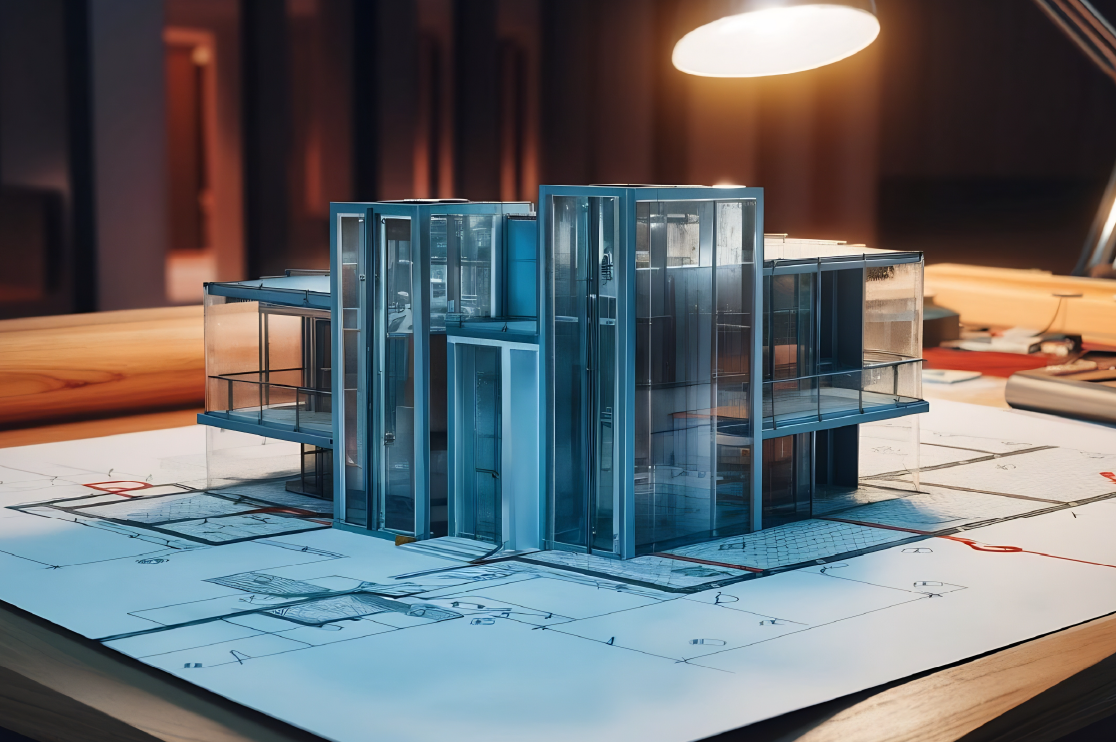
2025 is gone and will be remembered as the year where architectural CAD moved from just a drafting tool to intelligent, connected design platform. Indeed, driven by AI, BIM, cloud, and immersive tech that quietly rewired how we imagine, draw, and deliver buildings.
AEC teams that were once buried under PDFs and email threads found themselves collaborating in real time and sharing models in the cloud. And, Yes making decisions backed by data instead of guesswork.
AutoCAD and Revit still sat at the heart of most workflows, but now they were surrounded by a new layer of AI driven software that could suggest, automate, check, and even “think along” with designers.
So, as 2026 unfolds, it feels like the right moment to pause and look back: What actually changed in 2025? Which shifts are here to stay? And how will all of this shape the market trends, key stats, and growth story of the CAD industry in 2026 and beyond? Let’s dive in architecture industry outlook 2026.
Key Highlights of CAD Industry 2025
From AI breakthroughs to market realities that set the stage for future, here’s what actually moved the needle for AEC teams last year.
AI Moved From Experiments to Daily Workflows
AI was used for design assistance, clash detection suggestions, automated drafting, code checks and drawing clean up in CAD/BIM tools. Generative design and optimization became more common for layouts, façade options, and structural systems, especially when paired with BIM.
-
A report by Bluebeam suggests early adopters of AI in Construction design have reported massive growth in ROI.
BIM Becomes the New Normal
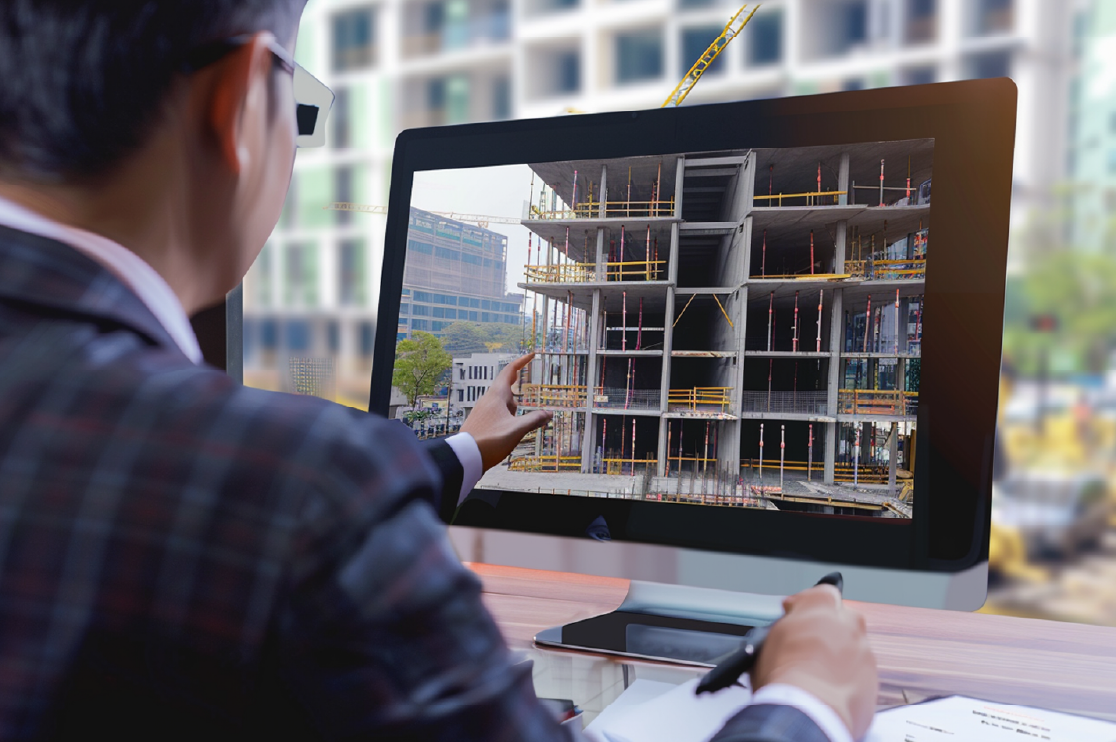
BIM remained the most widely adopted digital tech in AEC, with a clear majority of firms using it for coordination, quantity take offs, and 4D/5D planning.
More countries implemented mandatory BIM requirements for public projects (UK, Singapore, EU expansion). Non BIM firms increasingly planned BIM adoption within a 3–5 year window, driven by owner mandates and public sector requirements.
Learn more:
Cloud Collaboration Became Standard
Cloud hosted CAD/BIM and CDEs (common data environments) allowed multi office, multi vendor teams to work in real time, reducing version chaos. Cloud and browser based viewers made model access easier for owners, site teams, and non technical stakeholders.
AR/VR and Immersive Visualization Matured

VR walkthroughs and AR site overlays became common in design reviews and client presentations, improving decision making and approvals. Real time visualization and cloud rendering shortened iteration cycles for 3D renders and animations.
Sustainability and Performance Baked into Drawings
CAD/BIM workflows integrated energy analysis, daylight simulations and material take offs for low carbon design earlier in the process. Regulations and ESG reporting pushed firms to document embodied carbon and operational performance directly from models. LEED/BREEAM Integration allowed aautomated compliance checking for green building certifications
Market and Adoption Snapshot
The global CAD market is estimated around USD 12.2 billion in 2025, with projections to more than USD 22 billion by 2035 at CAGR ~6.4% . 3D visualization dominates CAD and CAE segments with over two thirds of market share, aligning with the shift from 2D drafting to model centric workflows.
CAD Trends Shaping Architecture 2026
So, what does the architecture industry outlook really say about 2026?
Forget incremental updates. This is the year CAD becomes your silent partner, with AI generating options overnight and cloud models making global teams move like one. Here’s what smart AEC leaders can’t miss. Let’s dig that down.
Industrial CAD Market Size & Forecast
According to industry reports, global architectural CAD market size was ~$11-12 billion in 2025 and is projected to reach $15-16 billion by 2030 at a CAGR: 8-10%.
Also, the architectural CAD software market size is projected at USD 30.17B in 2026 from USD 16.15B last year. This is indeed the fastest growing segment at 12-15% CAGR.
Key Growth Drivers for Architectural CAD 2026
-
Extensive adoption of advanced design tools and cloud based CAD, as owners and contractors demand greater predictability in cost, schedule, and quality through coordinated models, clash detection, and model based estimating.
-
AI driven design automation that suggests options, accelerates repetitive drafting, and enforces standards across large, complex drawing sets.
-
Rising investment in digital engineering, supported by initiatives such as national infrastructure programs, green transition policies, and rapid urbanization.
-
Increasing regulatory and compliance pressure, with building codes and authorities moving toward digital submissions and stricter energy efficiency requirements.
-
Clients expecting clear visual and quantitative proof of sustainability, including energy models, daylight analyses, and carbon reports generated directly from BIM and CAD models.
-
Hybrid, distributed teams across offices and countries that now rely on cloud hosted models and web viewers instead of exchanging heavy DWG/Revit files via email.
Do You Know? In 2026, firms with mature digital workflows and strong CAD/BIM partnerships are better positioned to win complex, risk heavy projects.
Major Geographies Gaining CAD Spotlight
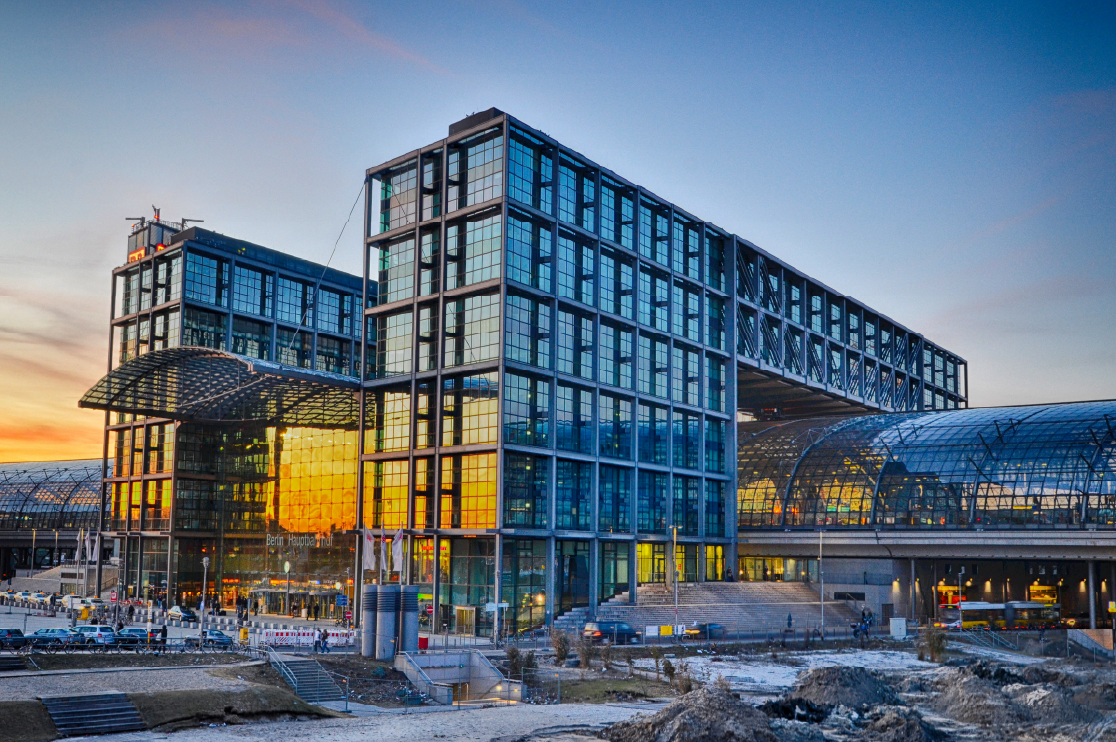
North America and UK will continue to be the key hubs architectural CAD followed by Canada, India, and Australia.
Reason? A strong demand in healthcare, data centers, transportation, and industrial projects. Major focus will be on renovation/retrofit and brownfield projects, which need accurate as builts and scan to BIM.
Coming to Middle East, strong emphasis on digital twins, AR/VR experiences and iconic architecture will be prevail. There will be a rise of high value megaprojects, mixed use, hospitality, and giga projects that demand advanced BIM, coordination, and photorealistic rendering.
Architectural CAD trends for Asia Pacific suggest rapid expansion driven by urbanization and infrastructure, boosting demand for scalable CAD, BIM, and visualization services.
New Architectural CAD Technological Paradigms
Let’s catch up with some new tech trends that will redefine how AEC teams design, collaborate, and deliver in 2026.
Generative AI & Design Copilots
AI Agents and AI assisted workflows now suggest better design alternatives, automate repetitive drafting, and generate real-time renderings. This dramatically compresses design cycles and freeing architects for strategic work.
Reality Capture & Scanning
LiDAR, photogrammetry, and drone integration enables rapid as-built documentation and scan-to-BIM workflows. Indeed, current CAD architecture trends play a vital role in helping bridge physical and digital environments.
Extended Reality (XR)
VR design reviews and AR on-site overlays are becoming standard practice, while mixed reality collaboration platforms enable remote teams to interact within shared virtual design spaces.
Neural Rendering & Visualization
This technology combines artificial intelligence and deep learning with computer graphics to generate or enhance visual content with unprecedented realism and efficiency. These advanced rendering engines deliver large scale photorealistic visualizations by performing computation in fractions of seconds.
IoT & Smart Building Integration
CAD platforms now incorporate sensor placement, building automation systems, and predictive maintenance considerations directly into the design phase. Further enabling seamless connectivity across the building lifecycle.
Blockchain & Smart Contracts (Emerging)
Early adoption for project documentation, supply chain transparency as well as automated milestone-based payments is gaining traction in large-scale and commercial architectural projects.
Quantum Computing (Research Phase)
While still experimental, quantum algorithms promise breakthrough capabilities in complex structural optimization and large-scale urban planning simulations.
Challenges Ahead for CAD Trends
Architectural CAD industry outlook also reveals persistent hurdles that could slow momentum if left unaddressed:
Skill and Talent Gap
The new architectural CAD industry outlook suggests that many AEC firms struggle to find CAD/BIM specialists and computational designers, even as demand for digital delivery grows. Training existing staff on AI, scripting and cloud platforms is a major 2026 priority.
Fragmented tech stack & interoperability
Multiple authoring tools, versions, and file formats create friction in coordination and data handover. Open standards (IFC, BCF, COBie) adoption is improving but still inconsistent across markets.
Change management & ROI concerns
Smaller firms worry about software costs, training time, and short term productivity dips. Many still use CAD “like digital drafting boards” instead of exploiting data rich models and automation.
Data security & IP protection
Cloud and multi party access raise questions on ownership, cybersecurity, and access control for models and drawings. Firms need governance around who can view, edit, and export models.
Recommended Reads:
Architecture Industry Outlook: Final Takeaway
2025 set a brilliant pace for architectural CAD and 2026 will accelerate it with even greater speed, precision, and undoubtedly, sheer impact. This architecture industry outlook equips AEC leaders and decision-makers to:
-
stay competitive
-
spot high-value investment opportunities
-
navigate risks with confidence
At BluEnt, the best CAD and BIM studio USA, we’re doubling down on our legacy of excellence, delivering AI-assisted CAD workflows, advanced BIM coordination along with 3D visualization.
We are way ahead in turning these trends into real project wins. Ready to future-proof your designs?







 Common Mistakes in Blender Architectural Rendering and How to Fix Them
  The Real Reasons CAD to BIM Conversion Is Accelerating Across AEC
  White House Renovation: Everything You Should Know About Neoclassical Architecture
  Key Elements of Contemporary Architecture: What Truly Defines the Modern Architectural Style?