





Quick Summary:
Casino millwork detailing breaks down at the material interfaces because casino fixtures combine many different materials like wood, metal, stone, glass, acrylic etc. Each trade draws and details only its own part. Every set of drawings is correct if seen individually but the joints between them are not addressed which shows up during the installation phase. The design is rarely the problem. The fix is to detail every joint with a clear gap size, room for adjustment and one specific trade to own the connection.
The casino millwork submittals for your Las Vegas casino renovation were approved weeks ago. The 3D casino renderings for the bar front design have already raised the client’s expectations.
Your shop built everything to the millwork drawings and sent them on the site for installation. Then the crew starts assembly on Monday night on a live gaming floor. But surprisingly, the metal frame and the wood panels did not meet.
The result? Rework, an idle crew, and delayed completion. Seriously impacting the budget. The worst part is that the drawings were flawless in their respective trades. This is what makes it so hard to explain to the client.
The problem sat in the few inches where one material meets another. No connection methods, no tolerances, no clearances etc. have been mentioned when mixed material fixtures are involved.
If you run a millwork shop, manage millwork detailing or work with a millwork drafting studio, you have probably seen this on a casino project.
Let’s understand why that happens in casino millwork drafting, where it shows up, and the best solution to this.
Table of Contents:
- Why is casino millwork almost never one material?
- Where do casino millwork shop drawings fail at the material interfaces?
- Why does millwork detailing for casinos get blamed for design problems?
- Which material interfaces cause casino millwork failures?
- Owning The Responsibility: How to Engineer Flawless Material Interfaces for Casino Floors
- BluEnt: Millwork Detailing Partner for High-Stakes Casino Projects
- Final Words
- FAQ
Why is Casino Millwork Almost Never One Material
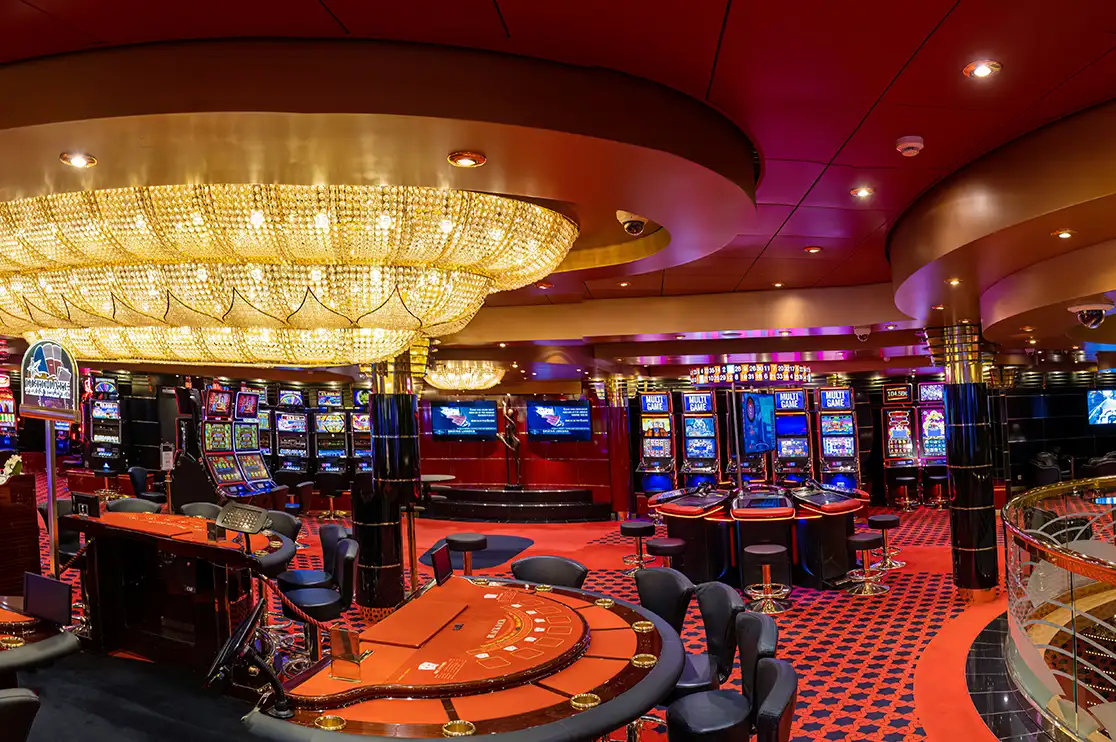
Whether it’s Nevada or New Jersey, the modern casino environment is rarely built from wood alone. From the main casino bar front and cage surrounds slot bases and feature walls, modern gaming design relies heavily on dissimilar materials and mixed-material fixtures.
For example – The image above clearly showcases layouts carrying wood panels, glass, acrylic, lighting and sometimes power or data.
It’s an intentional design strategy:
-
Brass and steel catch the high-end floor light.
-
Natural stone adds premium weight and permanence.
-
Walnuts and oak bring warmth to space.
-
Glass and acrylic carry ambient glow of the floor.
Every added material creates a physical intersection where two parts must meet. A single casino fixture can include a dozen interfaces!
The more feature items in the package, the greater the need for coordinated detailing. This is why casino millwork detailing differs from standard commercial casework. Custom millwork detailing set for casino has to describe a complete assembly, including every connection between materials.
Read More:
Where Casino Millwork Shop Drawings Fail at Material Interfaces

Let’s discuss a classic case of architectural woodwork failure caused by a total lack of coordination at the metal-to-wood interface.
-
The Requirement: A high-end casino bar front featuring a powder-coated steel frame inset with premium walnut panels.
-
The Intent: The architectural design dictates a crisp, intentional 1/4-inch reveal between the walnut panels and the surrounding metal frame.
-
The Execution: The metal vendor details the steel frame opening to nominal size. Independently, the millwork shop details the walnut panel to its nominal size.
On paper, this math works perfectly. The 1/4-inch reveal looks flawless in a 2D CAD environment.
During fabrication, theoretical dimensions clash with physical realities.
The powder-coating process adds measurable thickness to the steel frame. Simultaneously, walnut veneer, edge-banding and multiple layers of clear coat add thickness to the wood panel.
What happens next? The engineered 1/4-inch reveal quickly vanishes.
The gap becomes too tight and the tolerances stack up against the installers. The walnut panels ultimately bind, scratch or even refuse to fit into the steel openings altogether. Anyhow, the crew finds the gap and fixes it with a drill and a shim. Nobody records what happened, so the next package repeats it.
While the design concept remained sound, the execution failed because the interface lacked a coordinated, real-world engineering detail.
Why Millwork Detailing for Casinos Gets Blamed for Design Problems

The pain of millwork shops is real!
When a detail like the one given above fails on a casino floor:
-
Timelines are badly hit
-
Leads to destruction of premium finishes (material waste)
-
High rework cost
Casino millwork detailers often get blamed for design problems because failure appears late. By the time a gap or collision shows up on the casino floor:
-
The submittal package is closed.
-
The shop drawings have already been approved by the design team.
-
The hundreds of engineering hours invested in the submittal phase are completely forgotten.
When people look at a failed assembly on-site, they only see the visible result and ask, “Who fabricated this?”
They rarely ask, “Who actually owned the connection?”
Because the millwork is typically the final trade to install, material interface problems are routinely miscategorized as “site conditions,” “installation errors” or “poor vendor coordination.” The cost is real. It simply lands in the wrong column of the project ledger.
Which Material Interfaces Cause Casino Millwork Failures?
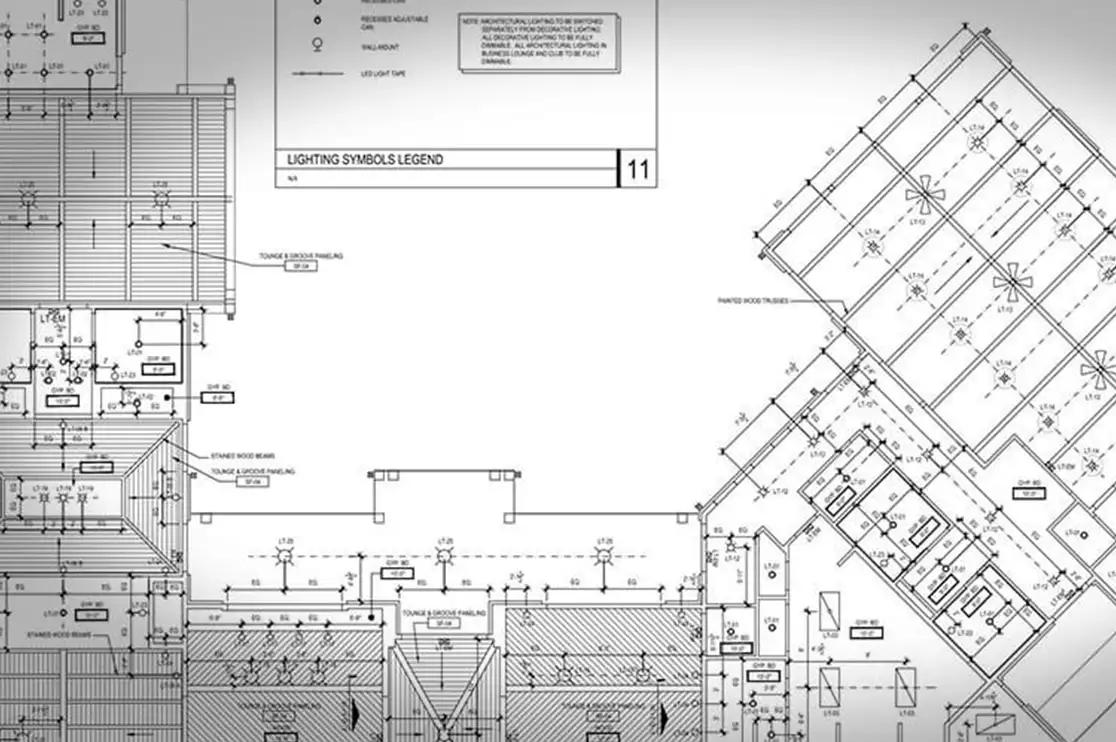
From our experience, here’re five high-risk interfaces that appear repeatedly in nightclubs and casino millwork shop drawings. To prevent this, your detailing team or your millwork drafting studio partner must explicitly address the following real-world conditions.
| Interface | What usually goes wrong | What the sheet needs to show |
|---|---|---|
| Metal frame to wood panel | Powder coat and wood finish make the parts thicker. The panel gets stuck or scratches during installation. | • The actual cut size of the wood. • The final gap size. • How the installer puts screws in. |
| Wood to glass or acrylic | The glass doesn’t fit or lacks support. If the glass breaks later, you can’t replace it easily. | • How the glass is held up. • Room for it to expand. • How to take it out to change it. |
| Millwork to lighting | The wood tracks are cut too late and ruin the cabinet frame. The lights get too hot or the tape peels off. | • Exactly where to cut the wood tracks. • How the wires run. • Where the power box hides. |
| Millwork to power and data | Metal pipes and wires block active drawers or cut right through finished panels. | • Clear paths for wires. • Pre-cut holes. • Removable panels to reach the junction boxes. |
| Wood to stone or solid surface | The heavy stone cracks at the seams or sags because the wood underneath isn’t strong enough. | • Plywood sub-tops. • Steel support frames. • Where the stone seams will sit. |
Metal-to-wood interface is the highest-risk junction. Reason? Metal and wood behave differently.
Metal fabrication and woodworking also use different tolerance expectations. A long wood panel fixed rigidly to a metal frame at both ends can create stress. Over time, you may see cupping, splitting, a visible gap or a reveal that falls out of alignment.
The millwork drawing for casino needs to answer three questions:
-
Which tolerance controls the connection?
-
Where does movement get absorbed?
-
Where can the installer make an adjustment?
Pro tip: Slotted holes, shims and adjustable brackets are practical detailing tools. They allow a mixed-material assembly to build correctly on a real site. Decide where adjustment belongs during detailing, before installation begins.
Owning The Responsibility: How to Engineer Flawless Material Interfaces for Casino Floors
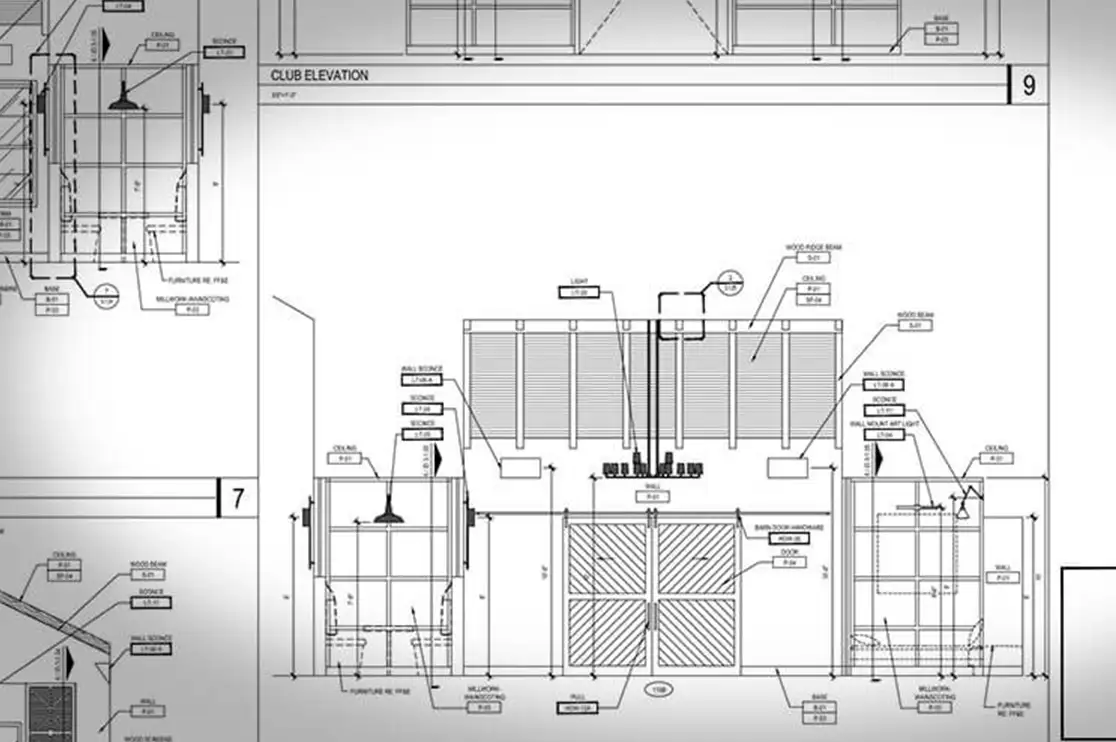
The best way to avoid on-site material interface failures is to resolve them on the sheet (in the drafting phase) before they reach your floor. A professionally detailed casino millwork shop drawing set does three things:
State Governing Tolerance
Every mixed-material connection needs one controlling dimension.
Traded materials such as steel, stone etc may carry wider manufacturing variances than precision woodwork. The millwork detail should identify the dimension that controls the reveal and absorbs the variance of the rougher trade.
The result is a reveal (gap between two materials) that stays consistent after both parts are finished and installed.
Plan Adjustability into the Detail
Tight nominal fits leave the installer with limited room to work.
For wood panels intended for metal openings, the casino millwork detailer plans adjustability for the different materials on the sheet. This allowance covers finish build-up from powder coating, veneer, edge banding, and clear coats.
Also giving the installer intentional play to float and center the panel. Depending on the fixture, that adjustment can come from slotted holes, shims, adjustable brackets, Z-clips or planned clearance.
The detail should decide where adjustment lives. That keeps the crew from inventing a fix on the gaming floor.
Give One Party Ownership of the Connection
Every interface needs one clear owner, without which there is a high-risk of assembly failure.
The casino millwork detail drawing should define:
-
installation sequence
-
fastener access points
-
allowable tolerance
-
other field-verification requirements
This gives the shop, metal vendor, and installer the same buildable answer.
A useful field note may read:
“Millwork vendor to verify physical steel frame dimensions prior to final walnut panel fabrication.”
That one instruction protects a premium wood panel from being fabricated against an assumed frame size.
Read more:
- See how millwork 3D and modelling supports complex fixture geometry and coordination.
BluEnt: Millwork Detailing Partner for High-Stakes Casino Projects
Managing thousands of detailed millwork sheets under compressed casino schedules requires strong engineering capacity. BluEnt has more than 23 years of industry experience and a scalable detailing team for high-volume casino and commercial millwork packages.
As a leading millwork shop drawings services provider in USA, we work across modern drafting and modelling platforms, including Microvellum, Cabinet Vision, AutoCAD etc.
Searching for best millwork detailing companies near me in the USA for casino projects? BluEnt offers AWI/AWMAC/WIC compliant shop drawings detailing services built for a clean, plug-and-play installation.
Final Words
On a fast-paced casino project, a design concept is only as strong as its final installation. When mixed-material fixtures fail on the gaming floor, you’re at risk of:
-
financial penalties
-
wasted premium materials
-
disrupted schedules
And everything lands on the fabricator. Partnering with a trusted and experienced casino millwork shop drawing services provider will help assign clear ownership to every interface.
Looking for a constructability review?
Frequently Asked Questions
What should casino millwork detailing include?Casino millwork detailing should include interface details, governing tolerances, adjustment provisions, fastener access, finish build-up allowances, field joints, assembly sequence, and access for lighting, power, and maintenance.
Can a millwork drafting studio coordinate with an existing metal vendor for casino projects?Yes, a professional millwork drafting studio such as BluEnt coordinates with an existing metal vendor. We detail the interface against the vendor’s actual drawings and fabrication tolerances while preserving each vendor’s scope.
Why do commercial millwork drafting packages need interface details?Commercial millwork drafting packages such as casino millwork need interface details because mixed-material fixtures involve different tolerances, finishes, movement behavior and installation methods. A dedicated interface detail prevents those differences from becoming field rework.
Why are casino millwork shop drawings more demanding than standard casework drawings?Casino millwork shop drawings are more demanding because casino fixtures combine more materials, get installed into live environments and often work within limited/strict installation windows. Everything has to be accurate. The millwork detailing for casino must resolve fabrication, delivery, assembly, service access and visible finish quality together.







 Hospital Millwork Submittals: 7 Reasons they Keep Coming Back
 Millwork BIM Coordination Done Right: IFC Workflows for LOD 350 vs LOD 400 & Production Readiness
 How CNC Ready Shop Drawings Protect Margins in Commercial Millwork Operations
 Reducing Redline Drawings in Millwork Submittals: Best Practices for Faster Project Delivery

