






If you’re an architect, engineer, or designer working on commercial or residential projects in the USA, you’ve likely heard the terms “BIM” and “digital twin” thrown around. Sometimes, people use them as if they mean the same thing.
But here’s the truth: they are not the same.
Understanding the difference between a digital twin vs BIM is no longer just a tech exercise. It’s becoming essential for delivering real value to building owners. Getting it right can mean the difference between handing over a static model that gathers digital dust and providing a living, breathing system that helps owners save money, time, and stress for decades.
In this blog, we’ll break down the difference in plain English, show you a real-world example, and explain why this shift matters for your projects and your clients.
BIM: The Foundation (A Perfect Model)
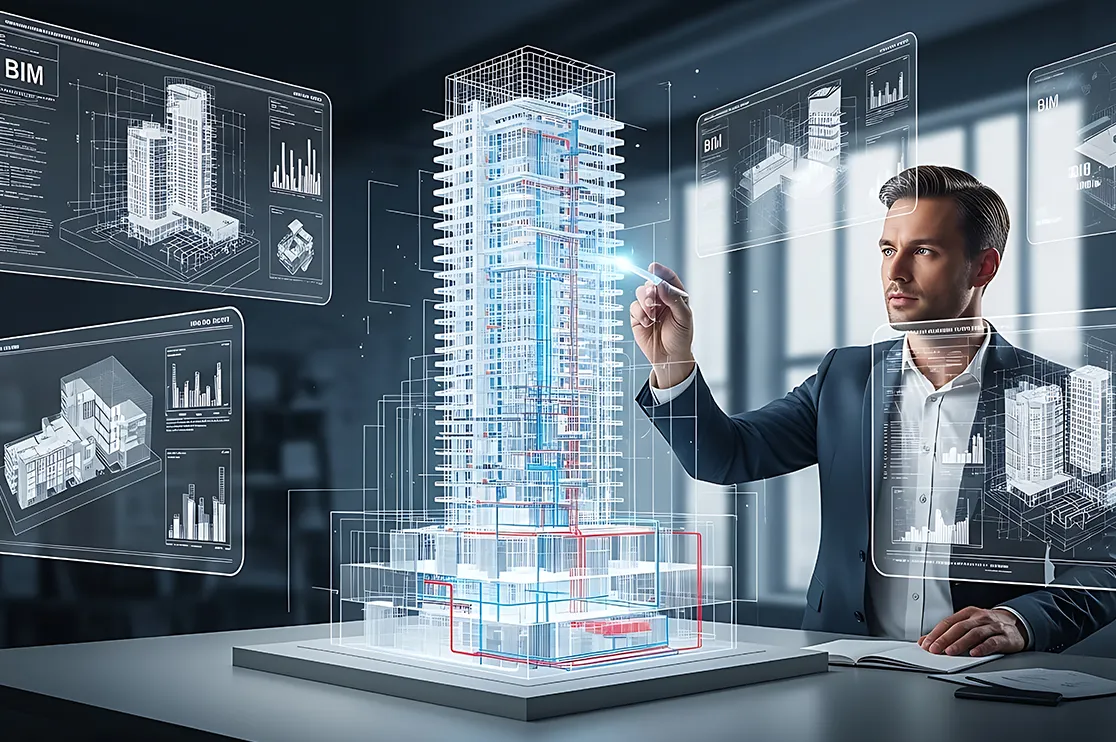
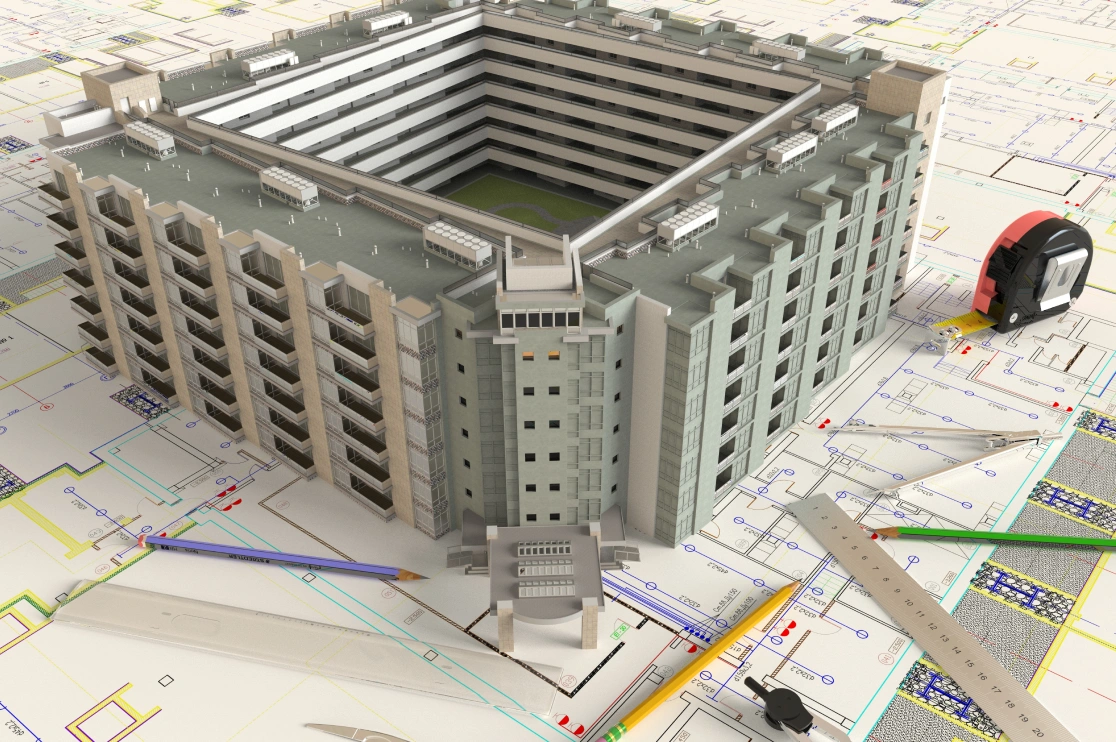
Think of Building Information Modeling (BIM) as the ultimate instruction manual and parts list for a building. As architects and designers, this is our world. We use tools like Revit to create a detailed 3D model that knows exactly what a wall is made of, what light fixture goes where, and how the HVAC system is supposed to connect.
BIM is incredible for design, collaboration, and construction. It helps us catch clashes before they happen on site and ensures the general contractor builds exactly what we designed. It is a static source of truth at a point in time which is usually the moment construction is complete.
Digital Twin: The Living Building (Data in Motion)
Now, imagine handing that BIM model over to the building owner. But instead of it just sitting on a server, you connect it to the internet.
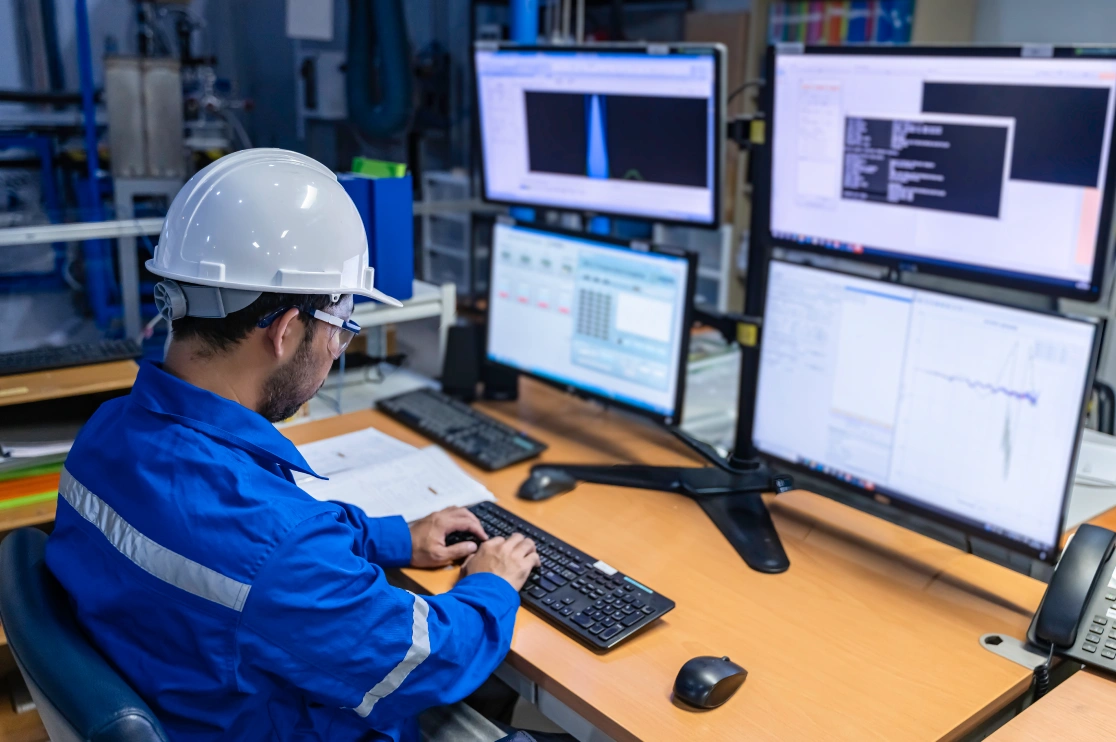
Suddenly, that virtual model starts to breathe. Sensors on the real air conditioning unit feed temperature data back into the model. A smart water meter shows live consumption. An IoT sensor on the third-floor reports that a conference room is overcrowded and the CO2 levels are rising.
That’s a digital twin. It’s not just a model; it’s a dynamic software representation that uses real-time building monitoring to mirror what’s actually happening in the physical building. It takes BIM for operations and makes it a reality by layering in live data.
The Dollar Question: What’s the Real Difference?
Let’s put down the digital twin vs BIM debate into a simple analogy:
-
BIM is like the detailed blueprints and specs of a new car. It tells you exactly how the engine is built, what size the tires are, and how the electrical system is laid out.
-
A Digital Twin is like the dashboard and onboard computer in that car when you drive it off the lot. It tells you your current speed, if the engine is overheating, when you need an oil change, and if your tire pressure is low.
BIM asks: “How was this built?”
A Digital Twin asks: “How is this performing right now?”
A digital twin uses smart building technology and IoT in construction to turn a static model into an operational tool. It’s the bridge from “as-designed” to “as-is.”
Why This Matters for Maintenance Planning
For the owners you work with, this shift from BIM to digital twin has huge practical benefits, especially for maintenance:
-
Predictive Maintenance: Instead of fixing something after it breaks (reactive) or servicing it on a fixed schedule (preventive), a digital twin enables predictive maintenance. Real-time data from sensors can tell you a motor is vibrating abnormally, allowing you to fix it before it fails.
-
Remote Facility Management: A property manager can monitor multiple buildings from their desk. They can check if the HVAC is running efficiently in Building A or if there’s a leak in Building B, all from a single dashboard. This saves time and travel costs.
-
Better Space Utilization: By tracking how people actually move through and use a building, owners can make smarter decisions about renovations, cleaning schedules, and even lease layouts.
-
Safety and Compliance: For complex facilities like hospitals or labs, a digital twin can track environmental conditions (temperature, humidity) in real-time to ensure compliance with strict regulations.
Recommended Reading:
How BluEnt Can Help You Bridge the Gap
So, how do you as a designer or architect, start delivering this kind of long-term value to your clients? You don’t have to become an IoT expert overnight. But you can partner with someone who speaks both languages: the language of perfect design (BIM) and the language of operational data (Digital Twins).
At BluEnt, we bridge that gap for firms like yours.
With over 80,000 successful projects under our belt, we’ve spent two decades helping US architects and engineers with high-quality BIM services, including Revit modeling, Scan to BIM, and BIM family creation. We know how to build that perfect digital foundation.
But we also understand the future is connected. Our expertise in creating data-rich models from 3D scans means we can help you prepare your BIM data to seamlessly integrate with operations platforms like IBM Maximo or other facility management software.
Whether you need a detailed BIM for a new hospital or want to convert a legacy building’s point cloud data into a model ready for smart sensors, BluEnt has the tools and the talent. We help you build not just for today’s deadline, but for tomorrow’s operations.
Ready to Make Your BIM Data Smarter?
Don’t let your models become static files. Let’s build a foundation for the future, together.
Frequently Asked Questions (FAQs)
Can you have a digital twin without BIM?Yes, but it’s harder. You can create a digital twin using simple 3D scans or even 2D drawings connected to sensors. However, starting with a rich BIM model provides a much more detailed and intelligent foundation for analysis and simulation.
Is a digital twin only for new, high-tech buildings?Not at all. This is where Scan to BIM comes in. For existing buildings, you can laser scan the structure, create a BIM model from that point cloud data (Scan to BIM), and then connect it to IoT sensors. It works for retrofits too.
Who is responsible for creating the digital twin?This is still a new field, but often it’s a collaboration. The design team (architects/engineers) provides the BIM model. The construction team updates it with “as-built” information. Then, the owner or a specialist technology consultant connects the operational data (IoT sensors, BMS systems) to create the twin.
Does using IoT in construction mean more cybersecurity risks?Yes, connecting any building system to the internet introduces potential vulnerabilities. It’s critical to work with IT and cybersecurity professionals to ensure the network and data are secure, especially for critical infrastructure.



 BIM for Commercial Construction: Solving the biggest Challenges in New builds and Renovation Projects
  The Strategic Limitations of BIM Managers in Preventing Hidden Project Costs
  How AI is Turning BIM into a Live Decision-Making Tool
  From Handover to Digital Twin: BIM for Facility Management