




Remember when digital transformation meant moving from hand-drawn blueprints to AutoCAD? That shift felt monumental. Lines became clean, erasers obsolete, and you could copy-paste in seconds.
But technology never stops evolving.
Today, the AEC industry is in another seismic shift, this time not about how we draw, but how we think. We’re witnessing the mass migration from traditional CAD to modern BIM. This transition is accelerating so fast that if you wait, the topic will already be history.
Recent data shows the global construction design software market is projected to hit $15.4 billion by 2030. This growth represents a fundamental change in how building designs are planned, executed, and managed.
This guide explores the practical reasons why CAD to BIM conversion is fast-tracking across the industry; examining market forces, technological pushes, and the undeniable financial sense making CAD to BIM services the new standard.
- The Great Digital Shift in AEC
- Beyond Lines: What CAD to BIM Actually Means
- Reason 1: The Data Tsunami and The Need for Intelligence
- Reason 2: The Government Mandate Is Here
- Reason 3: Chasing the $15.4 Billion Opportunity
- Reason 4: Because Rework Costs Real Money
- How BluEnt Helps To Makes Your CAD to BIM Transition Seamless
- Conclusion: Future-Proof Your Workflow with BluEnt
- FAQs
The Great Digital Shift in AEC
Let’s take an example of a modern construction site with has to be finished within faster timelines, tighter budget and involves more stakeholders than before. The complexities are already there. In such a scenario, a 2D drawing is no longer enough.
This is because while a 2D Drawing may show the perfect length of the wall, the door size and more, all of it with a very good visualization, it still lacks intelligence. The drawing does not tell you where that wall clashes with the HVAC duct or does not give you any idea about the door’s manufacturing, warranty and its fire rating.
The modern Building Information Modelling (BIM) changes it all. In this concept, a concrete digital twin of the building is created in a 3D model form which consists of all data that engineers, contractors and architects can work on simultaneously. It is basically a complete overhaul of the design process.
The good part is that the industry is not just adapting to the concept. Firms realize they need to stay competitive to win deals, and they are choosing to make this shift without hesitation.
Beyond Lines: What CAD to BIM Actually Means
Before we dive into the “why,” let’s clarify the “what.”
CAD to BIM conversion is not just turning 2D into 3D. That is simply modelling.
True CAD to BIM transforms legacy 2D files into intelligent 3D BIM models. It is the difference between a photo of an engine and the actual working engine.
With CAD, you see lines and layers to measure and print. With BIM, you see walls, ducts, and pipes, plus what they are made of, who supplies them, their cost, and how they interact with other components.
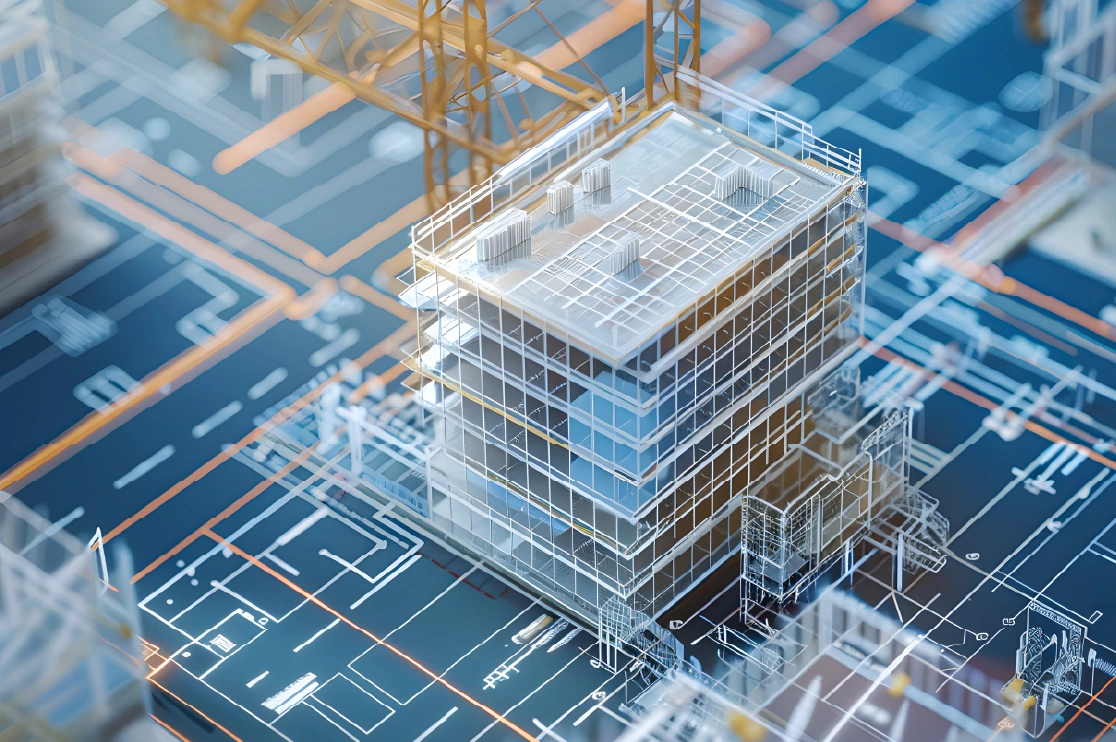
This transition now powers modern construction, enabling everything from clash detection to 4D scheduling.
Here is why demand for expert CAD to BIM services is exploding.
Reason 1: The Data Tsunami and The Need for Intelligence
BIM to simulate performance and optimize building systems.
We live in the age of information technology, and buildings are no exception. Modern infrastructure is not just bricks and mortar; it is a collection of thousands of data points. Owners want to know window energy efficiency; facility managers need HVAC maintenance schedules.
This data cannot be stored in a CAD line but it can be in a BIM object.
This need for data is accelerating CAD to BIM adoption. According to a recent engineering trends report, “three-dimensional models with parametric components and rich data are now the preferred method for designing vertical and horizontal projects.” Firms are no longer satisfied with just geometry; they demand information.
Furthermore, the integration of AI and Digital Twins relies on this rich data. You cannot have a smart building with a dumb drawing. The push for sustainability and energy-efficient design also demands BIM’s analytical power to simulate performance and optimize building systems.
Reason 2: The Government Mandate Is Here
For years, we heard rumours in the construction industry that “BIM is going to be mandatory.” Well, that is true now. Governments across North America, Europe, and the Asia-Pacific region are increasingly mandating BIM for public infrastructure projects.
Especially, if you want to bid on government contracts of schools, hospitals, transport hubs and more, you need to be BIM-compliant. It is no exception.
These mandates are in place because governments recognize that BIM increases project transparency, reduces risk for taxpayers, and ensures better lifecycle management of public assets.
This regulatory push is a massive accelerator. It forces even the most traditional firms to seek out CAD to BIM conversion company partnerships to handle legacy projects or upskill their internal teams. So it is no longer a choice, it is a protocol that you cannot ignore.
Recommended Reads
- Why CAD to BIM Conversion Fails Without the Right Partner?
- How BIM Services Enhance Collaboration, Design Choices, and Project Efficiency for Architects?
- BIM for Data Centers: Building Future-Ready, Scalable, High-Performance Facilities
- How AI BIM Modeling Shaping the Future of Residential Construction?
Reason 3: Chasing the $15.4 Billion Opportunity
Let’s talk money now. The global construction design software market is on a route to reach $15.4 billion by 2030, growing at a CAGR of 7.7%.
This is not just happening in mature markets like the US and UK but even economies like that of Asia and America are investing heavily in urbanization and infrastructure. The news is they are advancing straight to BIM.
For AEC firms, this represents a massive opportunity. Those who have mastered BIM and offer Revit drafting services are winning the greatest and most complex projects. They are able to work on international collaborations, leveraging cloud platforms to coordinate with teams across the globe in real time.
Unfortunately, for those who are sticking to legacy CAD workflows, it is a big lock out of this lucrative and high-growth market.
Reason 4: Because Rework Costs Real Money
Here is the simplest yet the most painful reason for the shift: CAD to BIM conversion saves money by preventing disasters.
Think about a typical large project. The architect draws the structure in one file, the mechanical engineer designs the ductwork in another, and the plumber lays out their pipes in a third.
With traditional CAD, these are cons and confusions. You only find out they don’t fit together when you are on-site, and the duct runs straight through a structural beam.
Any errors later might cost one-site thousands of dollars. Also, it ruins the customer-client relationships.
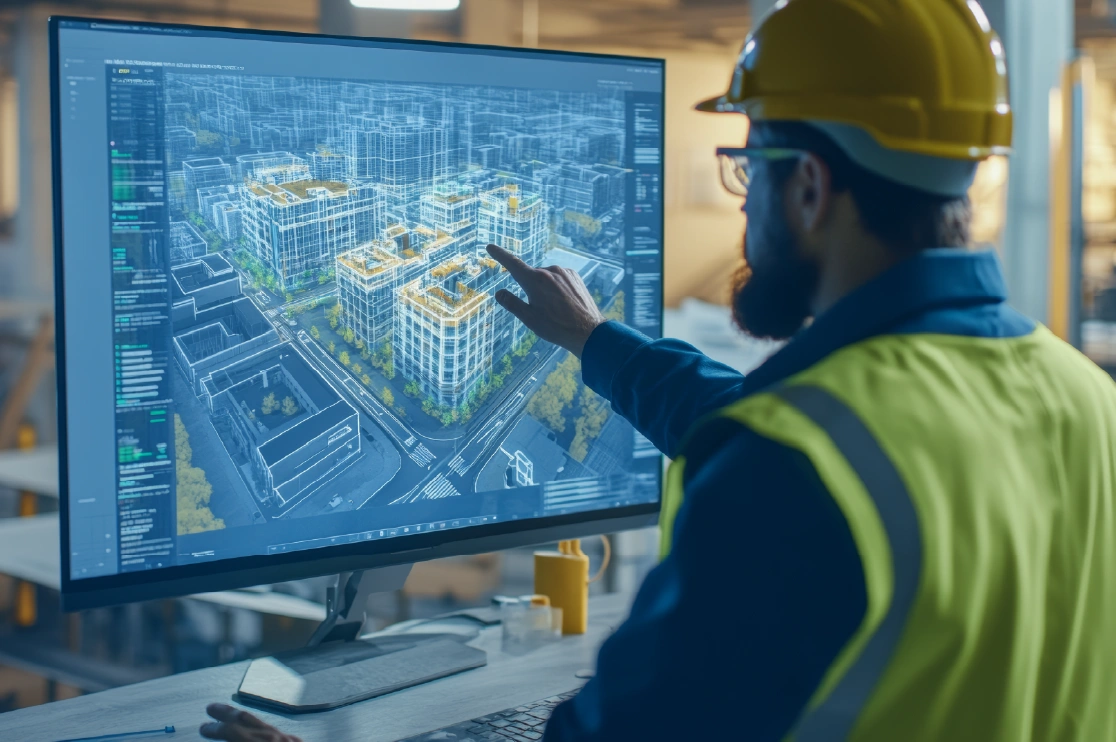
BIM eliminates this. It integrates architectural, structural, and MEP plans into a unified model, enabling automated clash detection. Conflicts are identified and resolved on screen, before a single shovelful of dirt is turned.
As changing a duct in the digital model costs nothing but changing it after installation costs a fortune; this proactive approach to problem-solving is the single most compelling reason for any CFO to green-light a CAD to BIM transition.
How BluEnt Helps to Make Your CAD to BIM Transition Seamless
By now, you understand why the shift to BIM is happening. But between deadlines and daily fires, when will you find time for legacy files?
That’s where BluEnt steps in. As an experienced CAD to BIM conversion partner, we don’t just translate drawings, we level up your project intelligence.
Here’s how:
-
We listen and assess first. No one-size-fits-all. We understand your needs, source files, and end goals.
-
We define the LOD required, from simple massing (LOD 200) to construction-ready models (LOD 350/400).
-
We structure output for your workflow. The final file is organized for your team, ready to use with no cleanup.
-
Our BIM experts build the model. Using Revit, we transform 2D CAD, PDFs, or point cloud data into a coordinated, data-rich 3D environment.
-
Everything becomes an intelligent object. Walls, windows, doors, and MEP systems are modeled as intelligent objects packed with real-world data.
-
You review and validate. We share the evolving model for your feedback and refine until perfect.
-
We deliver more than a file. You get a fully functional BIM model, native Revit files, clash-free and data-rich, ready for construction, take-offs, or facilities management.
Conclusion: Future-Proof Your Workflow with BluEnt
The shift from CAD to BIM is not a passing trend. It is the most significant evolution in AEC since drafting boards moved to desktops. Driven by data needs, government mandates, market opportunities, and cost savings from clash detection, BIM is becoming the universal language of construction.
Your past projects may live in CAD, but your future demands BIM. How do you bridge the gap?
At BluEnt, we specialize in that bridge. For over two decades, we have helped architects, engineers, and developers navigate complex transitions.
Our CAD to BIM services are painless, efficient, and deliver immediate value. We turn your files into assets that help you win work and build better.
Our approach is simple:
We listen first. We honour your goals, legacy data, and timeline.
We convert with skill. Your CAD files become accurate, data-packed BIM models.
We collaborate openly. You stay part of the process, ensuring the model works for you.
We deliver intelligence. Not just a 3D model, but a tool that functions across your building’s entire lifecycle.
Ready to bring your projects into the future? Whatever you’re building, we would love to help you model it smarter.
FAQs
What is the difference between CAD and BIM?In simple terms, CAD creates digital drawings with lines, while BIM builds intelligent 3D models where every object holds detailed data about itself.
Why should I convert my old CAD files to BIM?Converting legacy files to BIM unlocks data trapped in old drawings, enabling better management of existing buildings, confident renovations, and a single source of truth for new projects.
How long does a CAD to BIM conversion take?The timeline varies by project complexity and LOD. A simple plan may take days, a complex facility week. At BluEnt, we provide clear timelines after assessing your files and requirements.
Can you work from scanned drawings or PDFs?Yes. We accept various inputs, including PDFs, scanned images, and point cloud data, and convert them into accurate BIM models.
How does CAD to BIM conversion help with sustainability and green building certifications?Once in BIM, you can run energy analysis, daylight simulations, and material assessments not possible in 2D CAD. For example, BIM helps optimize glazing for energy efficiency and simplifies documentation for green certifications like LEED, BREEAM, or WELL. Converting to BIM means building smarter and greener.
What happens if my original CAD files have errors or inconsistencies?This happens often. Old drawings often contain contradictions. During conversion, we flag these inconsistencies for you rather than guessing. Think of it as a free health check for your drawings. You get a coordinated BIM model plus potential design issues caught before they become expensive site problems.






 Do You Really Need a BIM Execution Plan for Every Construction Project?
  Why Choose BIM for Educational Facilities and School Construction and Management Projects?
  Point Cloud to BIM or CAD: Which Workflow Is Right for Brownfield Facility Projects?
  Biggest BIM Mistakes That Cause Construction Projects to Fail and How to Avoid Them