



The short answer: to get an accurate BIM quote, send six things: your current drawings, models, or scan data; the trades and areas to model; the level of detail (LOD) you need; your software version and template; your deadline; and your BIM standards. Missing any of these turns a quote into a guess.
You send the same drawings to two BIM vendors. One quote comes back nearly twice the other.
Is one of them overcharging? Probably not. More likely, each vendor guessed differently about what you wanted, because the request left too much open.
The fix is simple. Send the right information up front, and every quote you get back is accurate and easy to compare.
- Why do BIM quotes for the same project vary so much?
- What should you send a BIM vendor for an accurate quote?
- What if you don’t have everything yet?
- Which details change a BIM quote the most?
- How do you protect your files when you send them?
- What should a good BIM quote include?
- Frequently asked questions
- Ready to get your BIM quote?
Why do BIM quotes for the same project vary so much?
Because each vendor fills the gaps in your request with their own assumptions.
One assumes you need architecture only. Another adds mechanical, electrical, and plumbing. One model to design stage detail. Another prices for fabrication. One plans a single round of revisions. Another plans three.
None of them are wrong. They’re just answering different questions.
When you give every vendor the same clear inputs, the quotes start answering the same question. That’s when you can compare them fairly.
Bring Your Projects to Life with Expert BIM Services
BluEntCAD delivers expert BIM services, including Revit modeling, BIM coordination, clash detection, scan-to-BIM, 4D scheduling, and 5D cost estimation, to streamline project delivery.

Download Brochure
Share a few details to access the commercial rendering brochure and learn more about our solutions.
Bim Brochure
What should you send a BIM vendor for an accurate quote?
Use this checklist. You don’t need everything to get started, but the more you send, the tighter the quote.
| What to send | Why it matters | If you don’t have it yet |
|---|---|---|
| Drawings, models, or scan data | Shows the size and complexity of the job | Send what exists, even sketches or photos |
| Scope: trades and areas | Sets how much has to be modeled | List the trades you know you need |
| LOD by stage | Drives most of the modeling effort | Describe what the model will be used for |
| Software, version, and template | Avoids rework and file problems | Name the software; send the template later |
| Deadline and milestones | Shapes team size and cost | Give a target date and how firm it is |
| BIM standards and file rules | Shapes naming, checks, and handover | Say which standard you follow, if any |
Your drawings, models, or scan data
Start with whatever describes the building today. That could be CAD files, PDF drawings, a Revit model, hand sketches, or photographs.
For an existing building, a point cloud helps most. That’s the 3D data a laser scanner captures on site. It lets the vendor see existing conditions instead of guessing from old drawings.
If you only have PDFs, that’s fine. Say so, and the vendor can allow time for CAD to BIM conversion or recommend a survey.
BIM scope: which trades and which areas
Say which disciplines you need modeled: architecture, structure, mechanical, electrical, plumbing, or fire protection. Then say which parts of the building.
“The whole building” and “floors 3 to 6, mechanical and electrical only” are very different jobs. Be specific.
LOD: how much detail, at which stage
LOD stands for level of development. It describes how much detail and reliable information each model element carries.
A model for early design might sit at LOD 200. A model for coordination is often LOD 300 to 350. A model for fabrication goes further still. Each step up adds time.
If you’re not sure which LOD you need, describe what the model is for: design review, clash detection, quantities, or facility management. A good vendor will suggest the right level.
Related read:
BIM software, version, and template
Name the software and the version, for example, Revit 2025. Files saved in a newer version can’t be opened in an older one, so this matters more than it seems.
If your firm has a BIM template with its own families, title blocks, and naming, send it. Modeling your template from day one saves a round of rework later.
Deadline and milestones
Give your target date and say how fixed it is. A tight deadline may need a bigger team, and that affects the price.
If the work comes in stages, list them. A vendor can then plan the team around your milestones.
BIM standards and file-sharing rules
Many larger projects run on a BIM execution plan, or BEP. It’s the rulebook for how the model is built, named, checked, and shared. Some follow the ISO 19650 standard.
If you have a BEP, send it. If you don’t, say how you’ll share files and who will review the model.
What if you don’t have everything yet?

Send what you have anyway.
A good vendor can work from partial information. They’ll give you a price range, list their assumptions, and firm the number up after a short call.
What you should avoid is a firm price based on guesses. If a vendor quotes without asking a single question, the gaps are hiding somewhere in the price.
Send us what you have. Drawings, a model, a scan, or even photos are enough to start. We sign a confidentiality agreement before you send anything, and a project lead reviews your files before we quote.
Which details change the BIM quote the most?
Five things move the price more than anything else:
-
Size and complexity: floor area, number of levels, and how dense the building systems are
-
Level of detail: each step up in LOD adds modeling time
-
Number of trades: more disciplines mean more modeling and more coordination
-
Deadline: a compressed schedule may need a larger team
-
Quality of your source data: clear, current drawings or scan data cost less to model from than old or conflicting ones
For existing buildings, the survey itself is a big part of the cost. Our scan to BIM services page explains how that work fits together.
How do you protect your files when you send them?
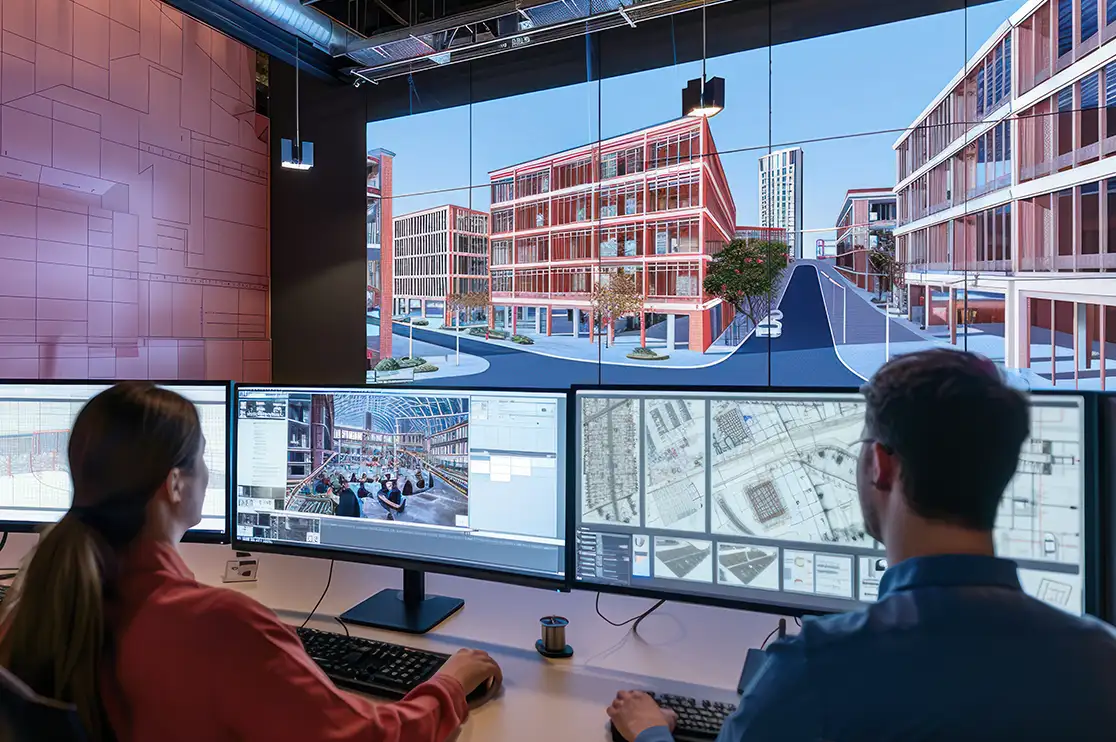
Your drawings and models are valuable. Protect them before you hit send.
-
Sign a confidentiality agreement (NDA) first. Use the vendor or your own.
-
Share files through one agreed, access-controlled folder, not scattered email attachments.
-
Send only what the quote needs. The full set can follow once you’ve chosen a vendor.
-
Ask who will see the files, and what happens to them if you don’t go ahead.
What should a good BIM quote include?
A useful quote tells you exactly what you’re buying. Check that it includes:
-
The scope: trades, areas, and LOD, in writing
-
Assumptions and exclusions
-
Deliverables and file formats
-
The schedule, with milestones
-
The pricing model and what triggers extra charges
-
How many rounds of revisions are included
The most telling part is the assumptions list. A vendor that writes down what it assumed has read your files carefully. A quote with no assumptions at all deserves a follow-up call.
Ready to get your BIM quote?
You now know what to send. Gather what you have, even if it’s incomplete, and send it over. We’ll review your files and come back with a written estimate and any questions we need answered first.
Frequently asked questions
Can I get a BIM quote from PDF drawings only?Yes. PDFs are a common starting point. The vendor may need to allow extra time to convert them, so say up front that PDFs are all you have.
How long does it take to get a BIM quote?It depends on the size of the project and how complete your files are. Ask each vendor when they respond and expect questions before a firm number on anything complex.
Should I share my budget with a BIM vendor?Sharing a range can help. It lets the vendor suggest the right scope and LOD for what you can spend, instead of pricing the most detailed option by default.
Do I need a BIM execution plan before I ask for a quote?No. It helps if you have one, but many buyers don’t at this stage. Tell the vendor how you’ll share and review files and ask whether they can help write the BEP.







 How to Choose a BIM Outsourcing Company: A Vendor Scorecard
 BIM for Airport Projects: How BIM Supports Complex Aviation Infrastructure
 Do You Really Need a BIM Execution Plan for Every Construction Project?
 Why Choose BIM for Educational Facilities and School Construction and Management Projects?