





In the world of architecture and engineering, change is the only constant. You might too have experienced such a scenario where your client loves the design but by the time he decides it the prices spiked up to $200,000. Or a material you specified just went up 15% overnight. Suddenly, your beautiful 3D model feels like just a pretty picture because the budget and timeline are now moving targets.
That’s where 5D BIM comes in to save you. If you’re an architect, engineer, or designer tired of manual quantity takes-offs and spreadsheet guesswork, this is the gamechanger you’ve been waiting for. By linking cost data directly to your 3D model, you stop guessing and start knowing.
In this guide, we’ll break down exactly how this works, how it integrates with scheduling (4D), and why it’s becoming the standard for smart project delivery across the USA.
Table of Contents:
What Exactly is 5D BIM?
Think of your standard 3D model as the “what”; as in what the building will look like. Simply put, 5D BIM adds the “how much” to your model. It is the process of attaching detailed cost data, material specifications and labor rates to every single component in your digital model. However, the capability of 5D BIM extends beyond simple cost estimation; it integrates cost data directly with project management functions to facilitate procurement and cash flow tracking.
By linking the 3D model to a timeline (4D), 5D BIM allows project managers to simulate the financial outlay of a project over time, ensuring that materials are ordered just-in-time for specific construction phases and that cash flow forecasts are dynamically updated as the schedule changes.
According to recent industry trends highlighted in resources like the Matterport blog on BIM trends, the move towards data-rich modelling is fast-tracking. Clients or project owners are not just asking for a visual; they are demanding predictability. Given current market pressures in the United States of America, where weekly construction compensation has reached a premium of 25% over the average private sector, attaching specific state-level labor rates (such as prevailing wages for carpenters or electricians) to a 5D BIM model is crucial for maintaining budget accuracy.
5D BIM gives them that predictability by transforming a static model into a dynamic and live cost database. This means when you stretch a wall, the budget updates automatically. It is that powerful.
How BIM for Cost Estimation Transforms Your Workflow
Traditional cost estimation is slow. You finish the model and then export quantities and lastly hand them off to a cost estimator who spends days or weeks pricing them out. By the time the estimate comes back, the design has already moved on.
With BIM for cost estimation, the estimate is built into the design process. You are not just designing a wall; you’re specifying a cost for that assembly right there in the model. This creates a feedback loop that saves ample time and prevents costly redesigns later.
Why this matters for US firms?
In a competitive market, speed and accuracy win proposals. A study by McKinsey suggests that large construction projects often run 80% over budget. Integrating cost early is your best defense against this.
Recommended Reading:
The Power of Quantity Takeoff BIM and Cost Codes
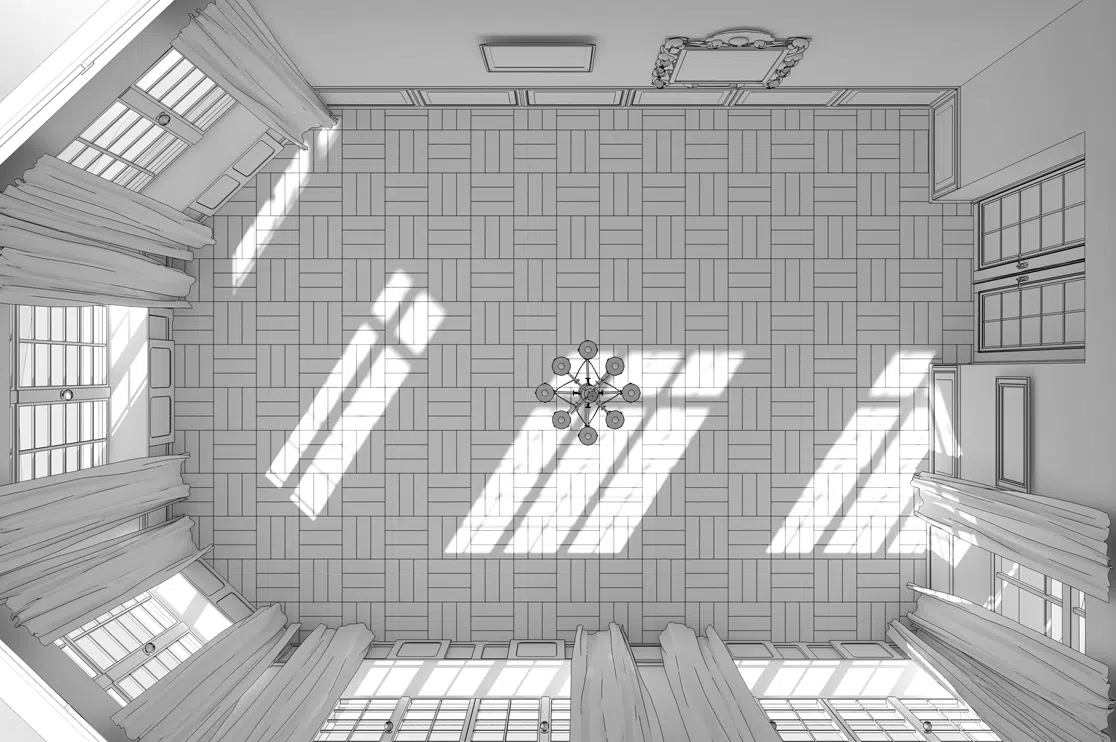
So, how does the magic actually happen? It comes down to two things: automation and organization.
Quantity Takeoff BIM means you no longer need to manually measure areas or count light fixtures. The software does it for you. It knows exactly how many square feet of drywall are in Room A and how many studs are needed to support it. This automated takeoff is not only faster but eliminates human error in counting.
But the real power lies in linking cost codes to model components. In the USA, construction accounting often relies on MasterFormat ((MasterFormat is a widely used standardized numbering system in USA which comprises of 50 divisions, published by the Construction Specifications Institute (CSI)) or UniFormat codes. 5D BIM allows you to attach these specific codes directly to your model elements.
For example, you can link a specific Revit family for a window not just to its dimensions, but to a specific cost code (e.g., for “Wood Windows”) and a specific vendor price. This creates a direct line from your design to the procurement team’s budget.
Bringing Time into the Equation: 4D 5D BIM Integration
Cost and schedule are two sides of the same coin. A delay in material delivery impacts labor costs. A change in the construction sequence can affect cash flow. This is where 4D 5D BIM integration becomes essential.
-
4D BIM links your 3D model to the construction schedule (the timeline).
-
5D BIM links it to the cost (the budget).
When you combine them, you create a powerful project management tool. You can visualize the construction sequence on a weekly basis and see the associated costs gathering in real-time. This construction scheduling BIM capability allows you to spot potential cash flow crunches before they actually happen.
This means that you can eventually see that if you pour the foundation in Week 3 instead of Week 4, you free up labor costs for the following month.
Recommended Reading:
Real-Time Budget Simulation: What If?
This is the part that gets clients really excited. Because your cost data is live, you can run “what if” scenarios instantly during a client meeting.
-
What if we switch the exterior cladding from brick to fiber cement? Watch the budget adjust in seconds.
-
What if we increase the ceiling height in the lobby? The model instantly recalculates the material and labor for the taller walls.
This ability to simulate budget impacts in real-time turns budget conversations from a point of conflict into a point of collaboration. The client feels in control, and you look like a hero who is on top of every dollar.
How BluEnt Can Help You Master 5D BIM
Implementing a 5D workflow requires more than just software; it requires expertise. At BluEnt, we have been helping architecture and engineering firms across the US in this aspect for years. We understand that your focus is on design, and managing complex data models can be overwhelming.
Our BIM services are designed to plug directly into your workflow. Whether you need help setting up a Revit model with the right parameters for cost modelling BIM, or you need a full team to handle clash detection and quantity extraction, we are your partner.
We do not just build models; we build data-rich assets that streamline your entire project lifecycle. From scan to BIM for renovation projects to creating custom Revit families with embedded cost data, our goal is to make your firm more efficient and profitable. We serve as an extension of your team, handling the heavy lifting so you can focus on what you do best: creating amazing spaces.
Ready to see how 5D BIM can bring clarity to your next project? Let’s talk about how we can integrate cost and schedule data into your models.
Frequently Asked Questions
What is the main difference between 4D and 5D BIM?Think of it simply: 4D BIM is the model linked to the schedule (time). 5D BIM is the model linked to the budget (cost). They work best when used together.
Do I need special software to use BIM for cost estimation?Most major BIM authoring tools like Revit support 5D workflows. However, they are often used in conjunction with specialized cost-estimating software or plugins that can read the data exported from the model.
Is 5D BIM only useful for large commercial projects?Not at all. While large firms adopted it first, mid-sized residential and commercial projects benefit immensely. Any project where budget control is critical can benefit from the accuracy of quantity takeoff BIM.
How accurate is quantity takeoff from a BIM model?If the model is built correctly (LOD 300 or higher), the quantity takeoff is extremely accurate which is far more than manual methods. The accuracy depends on the level of detail in the BIM for cost estimation model.
Can BluEnt help us implement 5D BIM in our firm?Absolutely. We offer BIM consulting and training to help your team get up to speed. We can also handle the modelling and cost data integration for you, acting as your dedicated BIM department.






 Why Choose BIM for Educational Facilities and School Construction and Management Projects?
  Point Cloud to BIM or CAD: Which Workflow Is Right for Brownfield Facility Projects?
  Biggest BIM Mistakes That Cause Construction Projects to Fail and How to Avoid Them
  CAD-to-BIM vs Scan-to-BIM: Which is Best for Existing Buildings?